
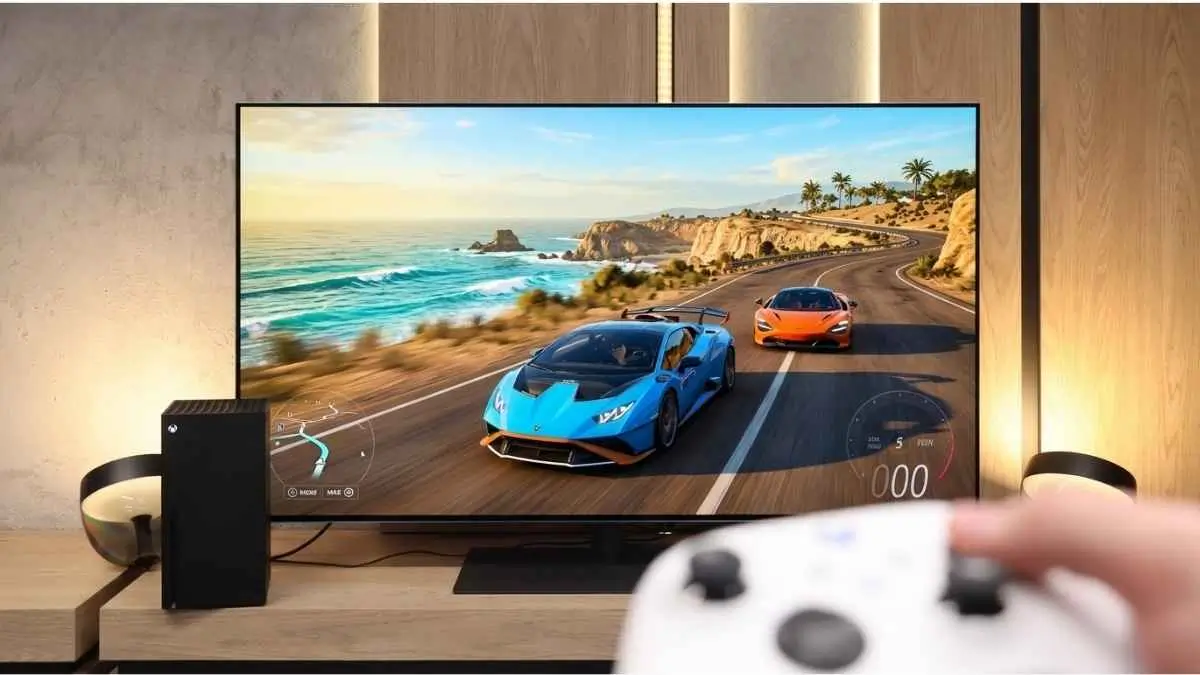

LG’s G5 OLED panel arrived in 2025 as a technological inflexion point for the company’s display division. Rather than iterating on the micro-lens array (MLA) approach used in the G4, LG Display introduced a fourth-generation Primary RGB Tandem OLED architecture. By stacking two independent emissive layers one handling red, one green, and one blue directly- the G5 delivers substantially higher peak brightness, purer colour, and better long-term efficiency than any previous LG OLED. Even as the newer G6 refines the formula further, the G5 remains a compelling flagship for home theatre enthusiasts, gamers, and value-conscious buyers in 2026. This article explains exactly how the technology works, what real-world performance you can expect, and whether the G5 still deserves a place in your living room.
Understanding LG G5 Panel Technology: An Overview
What Is the LG G5 OLED Panel?
The LG G5 uses a fourth-generation Primary RGB Tandem OLED panel. Unlike traditional WOLED (white OLED with colour filters) or MLA-enhanced panels, the G5 stacks two separate organic emissive layers, one dedicated to red/green/blue emission and one acting as a supporting luminance layer. This dual-layer structure lets the panel drive each colour channel harder without the efficiency losses that come from filtering white light. The panel retains OLED’s hallmark infinite contrast ratio and per-pixel dimming, so blacks remain perfect even as brightness reaches new heights.
Position in LG’s Premium OLED Lineup
The G5 sits at the top of LG’s 2025 OLED Gallery Series, targeting buyers who demand reference-grade picture quality. It sits above the C5 and B5 in the hierarchy, offering the highest brightness, the most advanced processor, and the largest range of screen sizes (55, 65, 77, 83, and 97 inches). In 2026, the G5 is often available at a discount as the G6 takes the flagship spot, making it a strong value proposition for those who want premium OLED without paying the latest-generation premium.
Key Technological Improvements Introduced
- Primary RGB Tandem OLED — dual stacked emissive layers for dramatically higher peak brightness
- Alpha 11 AI Processor Gen2 — faster neural network for real-time scene analysis and upscaling
- Improved burn-in prevention — refined pixel-refresh algorithms and brightness limiters for static content
- Full HDR format support — Dolby Vision, HDR10, HDR10+, HLG
- 99% DCI-P3 colour coverage — lifelike, accurate tones across all content types
How Primary RGB Tandem OLED Works: A Layer-by-Layer Breakdown
The Architecture Difference
Conventional WOLED panels use a single white-emitting organic layer, then pass that light through red, green, and blue colour filters. The filters absorb roughly two-thirds of the light, wasting energy and capping brightness. Primary RGB Tandem OLED eliminates the filters. Instead, the panel contains two separate stacks of organic materials:
- Stack 1 (Red & Green) — emits red and green light directly
- Stack 2 (Blue) — emits blue light directly, with a dedicated charge-generation layer between them
When a pixel needs to display a specific colour, the appropriate combination of stacks fires. Because the light is emitted in its pure wavelength, not filtered from white, the colour is more saturated and the energy loss drops to near zero. The tandem arrangement also means each layer operates at a lower current density than a single-layer OLED would need to produce the same brightness, which reduces thermal stress and extends the panel’s usable life.
Why LG Dropped MLA for Tandem
LG’s previous MLA (Micro Lens Array) approach placed tiny lenses over the pixel structure to redirect light that would otherwise be lost internally. It recovered efficiency that way, but it had a ceiling. MLA improved brightness extraction without changing what the emitter itself could produce. Tandem OLED attacks the problem differently by giving the emitter itself far more headroom. The result is that the G5 panel can hit brightness levels that MLA-equipped panels simply couldn’t reach, making HDR highlights more impactful and giving the display a fighting chance against competing Mini LED panels in well-lit rooms. For a broader comparison of how this stacks up against other display technologies, our overview of different panel technologies covers the trade-offs between OLED, IPS, VA, and Mini LED.
Brightness Performance and HDR Capabilities
Measured Brightness Improvements
The G5’s real-world brightness, measured in a calibrated 10% HDR window, lands around 2,200 nits, a substantial jump from the G4’s roughly 1,650 nits. In full-screen SDR, it hovers near 200–250 nits, which is standard for OLED panels. Where it truly shines is in specular highlights those tiny bright spots in HDR content that make glass, water, and explosions look genuinely convincing on screen.
| Metric | LG G5 | LG G4 |
|---|---|---|
| Peak HDR (10% window) | 2,200 nits | ~1,650 nits |
| Full-screen SDR | ~200–250 nits | ~150–200 nits |
| Real-scene HDR average | ~500–800 nits | ~300–500 nits |
HDR Formats Supported
The G5 covers all major HDR formats:
- Dolby Vision — dynamic tone mapping per scene or frame
- HDR10 — baseline standard for streaming and disc media
- HDR10+ — dynamic metadata support for Amazon and select Blu-ray titles
- HLG — for broadcast and live TV content
Dolby Vision HDR10 support on the G5 is particularly well-implemented. The Alpha 11 AI Processor Gen2 handles tone mapping in real time, adapting to each scene rather than applying a fixed curve across the entire movie. This means you see the full dynamic range the creator intended, from deep shadow detail to bright highlights, without clipping.
Brightness Improvements vs. OLED Longevity
Running an OLED panel harder to hit those high brightness numbers does raise a reasonable question: does it wear out faster? LG has addressed this through its tandem stack design, where each individual OLED layer runs at a lower drive current than a single-layer panel would need to hit the same brightness. That means less stress per layer, which translates to better long-term stability and slower brightness degradation over time. The G5 also includes OLED burn-in prevention features like pixel refreshing cycles and brightness limiters during static content scenes. In practice, the G5’s architecture gives it a healthier lifespan than many single-layer OLEDs despite its dramatic luminance gains.
LG G5 vs. LG G4: What Changed in OLED Panel Technology?
MLA (G4) vs. Primary RGB Tandem OLED (G5)
The G4 used MLA+ panels, which placed microscopic lenses over individual OLED pixels to redirect light more efficiently toward the viewer. It was a smart solution that pushed brightness beyond what standard WOLED could manage. The G5 ditched that approach entirely and went with Primary RGB Tandem OLED, a completely different architecture that stacks two independent OLED layers on top of each other.
| Feature | LG G4 | LG G5 |
|---|---|---|
| Panel Architecture | WOLED + MLA+ | Primary RGB Tandem OLED |
| Pixel Structure | White OLED + RGB filter | Pure RGB sub-pixel emission |
| Layer Count | Single emissive layer | Dual-stacked emissive layers |
| Colour Filter | Yes | No (direct RGB emission) |
The tandem structure lets the G5 hit higher brightness without pushing each organic layer to its limits, which directly reduces degradation over time. It’s a fundamentally more robust design.
Brightness and HDR Performance Differences
Both looked great on paper, but the G5 pulled noticeably ahead where it matters most: peak brightness in HDR content. The G4 topped out around 1,650 nits in small window measurements, which was impressive at the time. The G5 reached approximately 2,200 nits in calibrated test conditions, giving HDR highlights a genuinely more impactful punch. Real-world HDR viewing on the G5 shows:
- Specular highlights like sun reflections or explosions pop with more intensity.
- Dolby Vision and HDR10 tone mapping have more headroom to work with
- Near-black detail and bright peak coexist more naturally because the dual-layer structure handles contrast differently
Gaming Feature Upgrades
The G4 was already a strong gaming display, but the G5 tightened up several areas that competitive and enthusiast gamers care about. Key gaming upgrades from G4 to G5:
- Response time — G5 delivers slightly cleaner fast-motion handling due to the tandem structure’s faster pixel response
- Brightness in game mode — higher peak brightness means HDR game environments look more dynamic without washing out shadow detail.
- VRR stability — improved handling of variable refresh rate fluctuations across both HDMI 2.1 ports
- OLED Motion Pro — refined black frame insertion with less perceived flicker at higher insertion rates
Gamers who upgraded from the G4 noticed the difference most in brightly lit game environments: outdoor scenes, explosions, and UI elements that previously looked slightly clipped now had more definition and depth. If you’re shopping for a dedicated display instead of a TV, our best gaming monitor guide covers picks across every panel type and refresh rate.
Power Efficiency and Panel Longevity Improvements
One of the quieter but more meaningful wins with the G5’s Primary RGB Tandem OLED design is what it does for long-term panel health. Because each emissive layer only needs to drive at roughly half the intensity to reach the same output as the G4’s single layer, the organic compounds inside degrade more slowly. What that means for owners:
- Lower per-layer stress at equivalent brightness levels extends the operational life of each OLED stack
- Reduced burn-in risk over extended use, especially relevant for people who leave static content on screen for long periods
- Better power draw management: the G5 achieves higher brightness peaks without a proportional spike in energy consumption.
For someone keeping a TV for five to seven years, the G5’s architecture gives them a better shot at maintaining panel performance over that full window.
LG G5 Panel Processor and AI Picture Enhancement
Alpha 11 AI Processor Gen2: Image Processing Improvements
The Alpha 11 AI Processor Gen2 brings a meaningful leap in raw processing power compared to what shipped inside the G4. It runs a more refined neural network that breaks down each frame into zones, independently adjusting brightness, contrast, and texture detail in each one. The result is that dark scenes stay rich and detailed without crushing shadows, while bright highlights hold their structure instead of blooming out. Viewers who switch from older OLED sets often notice the difference immediately: motion looks cleaner, and fine details like fabric texture or hair strands appear with more definition.
AI Picture Pro Features
AI Picture Pro takes the processor’s capabilities and turns them into a suite of practical tools that run automatically in the background. The system detects faces and applies precise brightness and skin-tone corrections so people always look natural on screen. It also identifies object categories sky, foliage, skin, text and sharpens or softens each one independently rather than applying a one-size-fits-all filter. For sports content, it tracks fast-moving subjects and reduces motion blur on the fly, which sports fans watching live broadcasts tend to appreciate right away.
| AI Picture Pro Feature | What It Does |
|---|---|
| Face Detection & Enhancement | Adjusts brightness and tone for natural skin rendering |
| Object-Based Contrast | Independently sharpens different scene elements |
| Sports Motion Correction | Reduces blur on fast-moving on-screen action |
| Scene-Based Optimisation | Adapts picture settings automatically per content type |
AI-Based Upscaling
The G5’s AI upscaling engine is where the Alpha 11 AI Processor Gen2 really earns its place. It takes lower-resolution content, anything from 1080p streaming to older DVD-quality video, and reconstructs missing detail using deep learning models trained on thousands of image samples. Rather than just stretching pixels, it predicts what fine detail should be there and fills it in convincingly. Text edges come out sharper, background textures gain depth, and compressed video artefacts get smoothed out without making the image look artificially processed or plastic. Viewers streaming HD content on a 4K LG G5 OLED panel get a picture that genuinely punches above the source material’s actual quality.
LG G5 Panel Technology for Gaming
Gaming Display Specifications
| Spec | LG G5 Detail |
|---|---|
| Resolution | 4K (3840 × 2160) |
| Refresh Rate | Up to 165Hz |
| Response Time | 0.1ms (GtG) |
| HDMI Version | HDMI 2.1 (48Gbps) |
| VRR Support | G-Sync Compatible, FreeSync Premium Pro |
| ALLM | Yes |
| Input Lag | ~1ms @ 4K/120Hz |
4K 165Hz Gaming Capability
The LG G5’s gaming refresh rate of 165Hz sits above what most competing OLED TVs offer, and that extra headroom matters when playing fast-paced titles. You get smoother motion with less screen tearing, and the HDMI 2.1 ports handle full 4K/120Hz without compression, something that holds up well into 2026. For competitive gamers who also use a monitor, our guide on high-refresh-rate 1440p OLED displays can help you compare options, but the G5’s OLED response time is in a league of its own.
OLED Advantages for Gamers
Because every pixel on an OLED panel lights itself independently, black levels hit absolute zero instantly. Gamers get shadow detail in dark scenes that Mini LED simply cannot match, and the near-instant pixel response eliminates the motion blur that has long plagued LCD-based gaming displays. This is especially noticeable in fast-moving first-person shooters and racing games where every millisecond counts.
Gaming Features
- Auto Low Latency Mode (ALLM) — switches the TV into Game Mode automatically when a console is detected.
- Variable Refresh Rate (VRR) — syncs the panel’s refresh rate to the GPU output, cutting stuttering and tearing
- Game Optimiser Dashboard — a quick-access overlay lets you tweak dark room settings, genre presets, and input lag profiles without leaving the game.
- Dolby Vision Gaming — supports HDR10 and Dolby Vision at high frame rates, so you get tone-mapped HDR without sacrificing smoothness.
If you’re building a gaming setup, the G5’s OLED response time and VRR support make it a top contender. Check our guide on selecting the right gaming display for more tips on pairing it with a PC or console.
LG G5 Panel Colour Accuracy and Viewing Experience
Wide Colour Gamut and DCI-P3 Performance
The LG G5 panel technology covers close to 99% of the DCI-P3 colour space, which is the standard Hollywood studios and streaming platforms use when mastering content. That kind of coverage means colours look the way the director actually intended: not oversaturated, not washed out, but genuinely accurate.
| Colour Standard | LG G5 Coverage |
|---|---|
| sRGB | ~100% |
| DCI-P3 | ~99% |
| Rec. 2020 | ~83–87% |
Viewers who watch HDR content on streaming platforms like Netflix or Apple TV+ will notice that the G5 renders highlight details and colour gradients with a level of smoothness that most competing displays simply can’t match.
FILMMAKER MODE and Natural Skin Tones
FILMMAKER MODE is one of those features that sounds like marketing speak until someone actually uses it. When activated, it turns off motion smoothing, locks the colour space to the director’s intended specs, and preserves the original frame rate of the content. The result is that movies look like movies, not like a soap opera shot on a camcorder. Skin tones, in particular, benefit from this mode. The G5’s OLED evo panel technology handles warm tones without the orange push that plagues many LCD and even some older OLED panels. Faces look natural under different lighting conditions within a scene, and the panel’s per-pixel dimming ensures there’s no backlight glow bleeding into those tones.
Professional Calibration and Creator-Focused Accuracy
The LG G5 ships from the factory with solid out-of-box calibration, but it goes further by supporting Calman calibration software, which professional colourists and AV enthusiasts use to dial in precise accuracy. They can target specific white points, adjust colour tracking, and lock gamma curves to meet broadcast or cinema standards. Out-of-box, the G5 typically measures:
- Delta E (colour accuracy) — under 2.0 in Cinema or Expert modes
- White Point — close to D65 (6500K) without manual adjustment
- Gamma — tracks the 2.2 curve tightly across most brightness levels
For content creators who use their TV as a reference monitor or for anyone who simply wants to know what they’re watching looks exactly right, the LG G5 OLED panel holds up against dedicated professional displays at a fraction of the cost.
LG G5 Panel Technology: Advantages and Limitations
Advantages of LG G5 Panel Technology
- High brightness potential: the G5 panel was specified at an impressive 4,000 nits, a significant leap in LG OLED evo technology and HDR performance
- Advanced Primary RGB Tandem OLED architecture: the fourth-generation OLED panel structure provides enhanced luminance and colour output compared to prior generations
- Strong HDR performance: the panel’s high-nit specification positions it as a competitive display for Dolby Vision and HDR10 content delivery
- Excellent gaming credentials: 165Hz, 0.1ms response time, VRR, and ALLM make it a top-tier gaming display.
- Superior colour accuracy near-perfect DCI-P3 coverage and FILMMAKER MODE deliver cinema-grade out-of-box performance
Limitations of LG G5 Panel Technology
- Real-world brightness gap: despite the 4,000-nit panel specification, the G5 measured only 2,213 nits in real-world calibrated performance, a significant difference driven by TV manufacturers’ tuning decisions, particularly in calibrated modes
- Banding artefacts: Visible banding in gradients was a confirmed quality control issue affecting the 2025 generation of LG OLED TVs, which included the G5, impacting the overall picture quality experience in subtle low-light scenes
- Reflection management shortcomings: the G5 lacked the advanced anti-glare solution introduced in the G6, which features a Reflection Free Premium coating achieving a 0.3% reflection rate. In bright rooms, the G5’s standard glossy finish can show distracting reflections
- No 8K option: unlike some competing flagships, the G5 is limited to 4K resolution, which may be a consideration for future-proofing
| Aspect | LG G5 Reality |
|---|---|
| Specified Brightness | 4,000 nits |
| Calibrated Measured Brightness | 2,213 nits |
| Banding Issue | Present |
| Anti-Glare Coating | Standard (not Reflection Free Premium) |
How Later OLED Generations Improved Upon LG G5 Technology
Next-Generation Tandem OLED Brightness Improvements
The LG G6 builds on the G5’s Primary RGB Tandem OLED foundation by introducing the Primary RGB Tandem 2.0 OLED panel, marketed under the Hyper Radiant Colour Technology branding. This refined architecture maximises light efficiency through an improved pixel structure and updated algorithms. As a result, the G6 delivers up to 20% more peak brightness than the G5, reaching a remarkable 4,500 nits peak output a meaningful leap that reinforces LG’s position at the top of the OLED brightness hierarchy.
Advanced Reflection Reduction Technology
With brightness improvements addressed, LG also tackled one of the most persistent challenges in display performance: reflections. The G6 incorporates advanced light-absorption and diffusion technology, achieving a reflection rate of just 0.3%, the lowest among existing displays at the time. The panel also features a dedicated Reflection Free Premium anti-glare coating, delivering a substantially cleaner image in bright ambient lighting conditions compared to the LG G5 OLED panel.
AI Processor Refinements
The G6 includes the Alpha 11 AI Processor Gen3, representing a substantial upgrade over the Alpha 11 AI Processor Gen2 found in the G5. This new chip delivers improved CPU, GPU, and neural processing speeds, enabling more precise real-time picture enhancement, upscaling, and AI-driven optimisations across all content types.
Improved Gradient Handling
The G5 generation exhibited banding artefacts in gradients, a known weakness that affected smooth tonal transitions in subtle scenes. The G6 generation directly addressed this limitation, with LG engineering gradient handling improvements into the new panel and processing pipeline. This fix represents one of the most visible image quality refinements users can perceive in everyday viewing.
| Feature | LG G5 | LG G6 |
|---|---|---|
| Panel Type | Primary RGB Tandem OLED | Primary RGB Tandem 2.0 OLED |
| Peak Brightness | 4,000 nits (rated) / 2,200 nits (calibrated) | Up to 4,500 nits |
| Reflection Rate | Standard OLED anti-glare | 0.3% (lowest available) |
| AI Processor | Alpha 11 AI Processor Gen2 | Alpha 11 AI Processor Gen3 |
| Gradient Banding | Present | Fixed |
Who Benefits Most From G5 Panel Technology in 2026
Home Theatre Enthusiasts Seeking Accurate Colours and Deep Blacks
Home theatre enthusiasts stand among the clearest beneficiaries of LG G5 panel technology. OLED’s perfect blacks and near-instant pixel response deliver a picture quality that holds up under direct comparison with virtually any competing display technology. They experience cinematic content exactly as it was intended with deep shadow detail, rich contrast, and no blooming around bright highlights. For those who also want to understand how this compares to other panel types, our overview of IPS panel technology provides a useful reference.
Gamers Who Prioritise Fast Response Times and VRR Support
Gamers who prioritise fast response times find strong value in the G5’s near-instant pixel response, a defining advantage of OLED panel architecture. While the successor G6 introduced updated gaming specs including 4K at 165Hz with VRR, NVIDIA G-SYNC, and AMD FreeSync Premium, the G5 still delivers the responsive, low-latency performance that competitive and immersive gaming demands. The G5’s Game Optimiser Dashboard and Dolby Vision Gaming support make it a versatile choice for both console and PC players.
Value Buyers Looking for Previous-Generation Flagship OLED Technology
Value-conscious shoppers benefit from how G-series panel technology filters down into more accessible pricing tiers over time. Notably, the 77-inch and 83-inch C6H models now use the same Primary RGB Tandem 2.0 panel found in the G6, which meaningfully shifts the value proposition for size-focused buyers. But the G5 itself is often available at a significant discount in 2026, making G5-level OLED performance increasingly attainable without flagship pricing. If you’re on a tighter budget, our guide to budget-friendly high-performance monitors can help you compare alternatives.
Premium OLED Buyers Looking for Long-Term Display Quality
Premium buyers who invested in LG G5 OLED technology retain a display built on fourth-generation OLED architecture, with high-brightness HDR performance and accurate colour reproduction that continues to deliver long-term visual quality. For those not yet ready to upgrade to the G6’s newer specifications, the G5 remains a sophisticated, high-performing OLED panel in 2026.
Is LG G5 Panel Technology Still Worth Buying in 2026?
The LG G5 panel technology remains worth buying in 2026 for most home theatre enthusiasts. Its Primary RGB Tandem OLED architecture delivers exceptional brightness, near-perfect colour accuracy, and stunning HDR performance that still outpaces most competing displays. Unless budget allows for the LG G6, the G5 holds its ground as a premium OLED choice.
Who Should Upgrade to the LG G5 Right Now
- Buyers coming from LED or older OLED panels who want a significant visual leap will find the LG G5 OLED panel a massive upgrade.
- Those who prioritise Dolby Vision and HDR10 support alongside wide DCI-P3 colour accuracy get tremendous value here.
- Gamers seeking a high-refresh-rate OLED gaming display with near-instant response times will love what the G5 brings to the table.
- Home theatre owners who want cinema-grade picture quality without spending on the newer LG G6 will find the G5 hits a sweet spot.
Who Should Wait for Newer OLED Technology
- Anyone who has already owned an LG G4 and is happy with their picture quality might not feel the jump justifies the cost right now
- Those who follow cutting-edge OLED panel architecture closely and know the LG G6 refinements are coming at a better price point should hold off
- Buyers who are extremely sensitive to OLED burn-in prevention improvements in later generations may prefer waiting for the next iteration
Best Use Cases for LG G5 in 2026
| Use Case | Why G5 Works |
|---|---|
| 4K HDR Movie Watching | Primary RGB Tandem OLED handles peak brightness beautifully |
| Console & PC Gaming | High refresh rate and low input lag shine here |
| Sports Viewing | Bright panel handles fast motion without ghosting |
| Colour-Critical Viewing | Near-perfect DCI-P3 coverage satisfies demanding viewers |
Conclusion
The LG G5 panel technology remains a genuinely impressive OLED achievement heading into 2026. Its Primary RGB Tandem architecture delivered a real leap in brightness and efficiency over the G4, even with known limitations like gradient banding and reflection handling. While the newer G6 pushes brightness and reflection performance further, the G5 still holds up as a capable, well-rounded flagship for buyers prioritising picture quality, gaming performance, and long-term value at increasingly accessible pricing. For the latest pricing and availability, visit LG’s official site to see current offers.
Frequently Asked Questions About the LG G5 OLED Panel
What is the Primary RGB Tandem OLED on the LG G5?
Primary RGB Tandem OLED is a fourth-generation panel architecture that stacks two separate emissive layers, with dedicated red, green, and blue organic light sources, instead of relying on a single white OLED layer filtered through colour elements. This design pushes peak brightness significantly higher than standard OLED panels while preserving perfect black levels and pixel-level dimming.
How bright is the LG G5 OLED panel?
The LG G5 is rated up to 4,000 nits peak brightness, though independent calibrated testing measured approximately 2,200 nits in a 10% HDR window. That’s still a substantial increase over the LG G4’s roughly 1,650 nits, making the G5 one of the brightest OLED panels available when it launched in 2025.
Is the LG G5 better than the LG G4?
Yes, the LG G5 improves on the G4 by replacing MLA (Micro Lens Array) technology with Primary RGB Tandem OLED, resulting in higher peak brightness, better power efficiency, and reduced long-term burn-in risk. Gaming performance and HDR highlight detail are also noticeably improved over the G4 generation.
Does the LG G5 have a banding problem?
Yes, some LG G5 units exhibit visible banding artefacts in dark gradient scenes, a confirmed issue affecting LG’s 2025 OLED generation. This typically shows up as faint stepped lines instead of smooth colour transitions in low-light content like night skies or shadow-heavy scenes, though severity varies by unit.
What refresh rate does the LG G5 support?
The LG G5 supports up to a 165Hz refresh rate on compatible screen sizes, paired with a 0.1ms response time and HDMI 2.1 ports capable of 4K at high frame rates. It also supports NVIDIA G-SYNC Compatible and AMD FreeSync Premium for tear-free variable refresh rate gaming.
Is the LG G6 significantly better than the G5?
Yes, the LG G6 uses Primary RGB Tandem 2.0 technology, delivering up to 4,500 nits peak brightness, roughly 20% brighter than the G5. It also adds a 0.3% reflection coating, an upgraded Alpha 11 AI Processor Gen3, and largely resolves the gradient banding issue found in the G5.
Is the LG G5 still worth buying in 2026?
Yes, for most buyers, the LG G5 remains a strong choice in 2026, especially at reduced pricing now that the G6 has launched. Its Primary RGB Tandem OLED still delivers exceptional contrast, brightness, and HDR performance; only buyers prioritising maximum brightness or reduced reflections should consider waiting for the G6 instead.


1 Comment
Excellent article! The explanation of the LG G5’s Primary RGB Tandem OLED technology, HDR performance, gaming features, and comparison with the G4 was very clear and easy to understand. The technical concepts were presented in a simple and accessible way. Looking forward to more informative content like this. Thank you!
Leave a Reply