
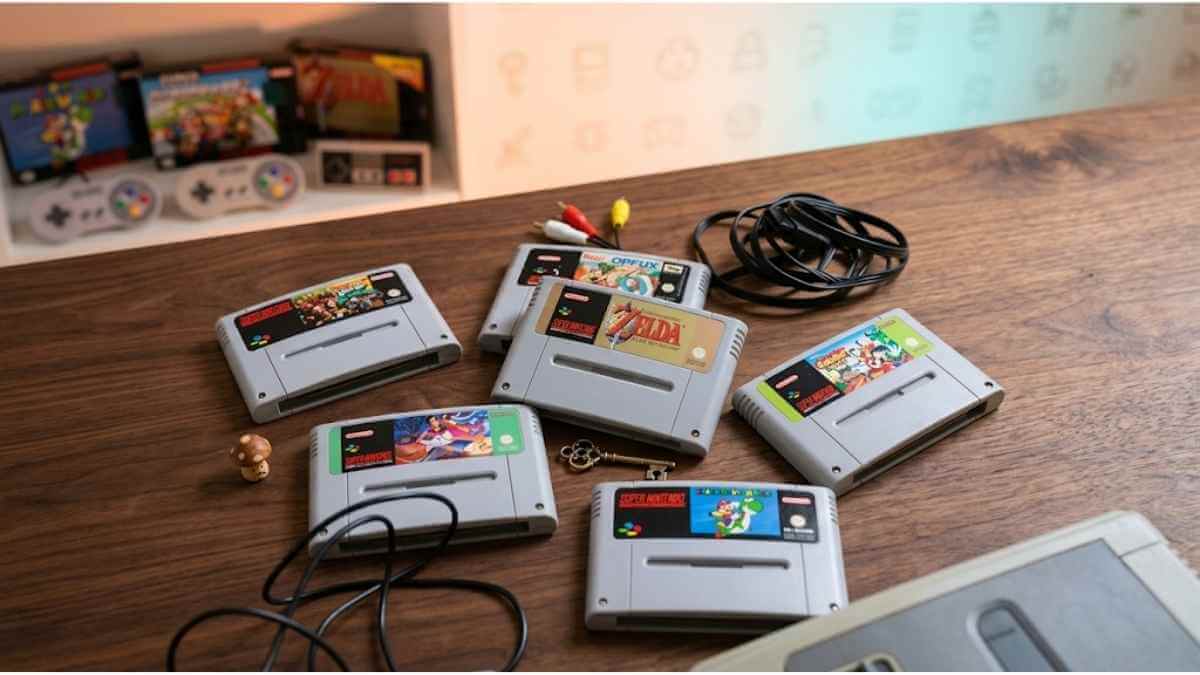

I’ve been playing SNES games since I was seven years old, and I still think the Super Nintendo had the greatest game library ever put on a single console. That’s not nostalgia talking; it’s a catalogue that holds up in 2026 better than most modern releases.
This list of the best SNES games of all time is for retro gaming fans, newcomers who want to know where to start, and anyone who’s been wondering which Super Nintendo must-play games are actually worth their time today. I ranked all 35 based on gameplay, legacy, and how well they hold up right now, not just how they felt in 1993.
Here’s what I cover beyond the rankings:
- Hidden gem SNES games you probably slept on, including some bottom-tier picks that deserve a second look
- How to play SNES games in 2026, from the Nintendo Switch Online library to emulation options that work on your current setup
- Whether your monitor matters for retro gaming because playing a 16-bit game on the wrong display can genuinely kill the experience
From the greatest 16-bit games ever made like Chrono Trigger and Super Metroid, all the way down to overlooked co-op gems, I’ve got the full breakdown below.
Why the SNES Remains One of Gaming’s Greatest Consoles
The 16-Bit Era and Its Lasting Impact on Gaming History
When I look back at gaming history, few moments feel as defining as the rise of the 16-bit era. The SNES debuted its beloved 16-bit console almost three decades ago, yet its contributions to the golden age of gaming are still deeply remembered and celebrated. What strikes me most is how a console from that era continues to influence game design, storytelling, and mechanics in ways we still recognise today. The sheer density of quality titles released on the platform gave it one of the greatest game catalogues ever assembled on a single system.
How the SNES Defined Multiple Genres Including Platformers, RPGs, and Fighting Games
From my perspective, no console did more to define its genre than the SNES. It was the home not only of the best platformers of the day but also of a platform that brought the finest RPGs Japan had to offer to Western audiences. The SNES was the birthplace of the Metroidvania genre, a legacy that continues to shape indie development today.
The Birthplace of Iconic Franchises Still Celebrated Today
I also find it remarkable that the SNES was the first console to let players kart race with Mario and friends, launching a franchise that remains a cultural staple. These aren’t just nostalgic footnotes; they are foundational pillars of modern gaming culture worth revisiting.
The Bottom Tier (Games 35-26): Hidden Gems Worth Revisiting
35. Killer Instinct: Rare’s Brutal Fighting Game with a Killer Combo System
Killer Instinct is a real fighting game gem that brought a slick, brutal combo system and an unmistakably cool 90s aesthetic to the SNES. It featured pseudo-3D graphics that pushed the console’s capabilities, and while the SNES port trimmed certain visual flourishes compared to the arcade original, its core fighting mechanics remained completely intact. For retro gamers, it remains one of the most stylish and mechanically satisfying brawlers of the 16-bit era.
How It Holds Up in 2026: The combo system still feels surprisingly deep and rewarding, even by today’s standards. The visuals are obviously dated, but there’s a raw, punchy energy to every match that keeps it genuinely entertaining on modern displays.
34. Mario Paint: The Creative SNES Experience That Let Players Make Their Own Fun
Mario Paint was essentially Microsoft Paint for the SNES, and it was nothing short of revolutionary for home console creativity at the time. Using the SNES mouse peripheral, players could draw original artwork, create simple animations, compose music using Super Mario Bros. sound bites, and even play a surprisingly addictive fly-swatter minigame. It’s one of those titles that defies traditional genre classification; it wasn’t really a “game” in the conventional sense, but it gave players the tools to craft their own fun in ways that felt genuinely ahead of their time.
How It Holds Up in 2026: Mario Paint is more of a nostalgic curiosity than an experience you’d sit down with for hours in 2026, but the music composer still sparks joy in a way that’s hard to explain. If you can get your hands on the original SNES mouse, there’s a charming, lo-fi creativity here that modern apps just can’t replicate.
33. Super Empire Strikes Back: The Best Star Wars Game You May Have Forgotten
Considered by many to be one of the best Star Wars games ever made, Super Empire Strikes Back offered a rich balance of action and diversity that surpassed its predecessor in almost every way. The side-scrolling gameplay captured the golden age of the genre beautifully, and the rich visuals brought the world of Hoth, Dagobah, and Cloud City to life with impressive fidelity for the era. If you’re a Star Wars fan who somehow missed this one, consider it essential playing.
How It Holds Up in 2026: The side-scrolling action gameplay still feels tight and purposeful, even if the difficulty can feel punishing by modern standards. Visually, it holds up well for a 16-bit title, and the Star Wars atmosphere it captures is genuinely impressive even decades later.
32. Zombies Ate My Neighbours: A Rare Co-Op Horror Action Gem
Zombies Ate My Neighbours is an exceptional top-down SNES shooter that lets two players team up to battle zombies, ghouls, and goblins through wonderfully campy, Goosebumps-like environments. What made it stand out in the SNES library was its rare co-op gameplay; sharing the couch with a friend as you scrambled to rescue survivors while fending off increasingly bizarre monsters was an experience few games of the era could match. It’s one of the best hidden gem SNES games that deserves far more recognition than it typically receives.
How It Holds Up in 2026: The top-down perspective and chaotic level design hold up surprisingly well, especially when played with a friend in local co-op. The humour and B-movie charm give it a timeless personality that still lands in 2026.
31. Ogre Battle: March of the Black Queen: The SNES’s Deepest Strategy RPG Experience
Ogre Battle: March of the Black Queen is one of the best strategy experiences of the 16-bit era, and it sacrificed little in terms of tactical RPG depth to fit on a SNES cartridge. The battles are deep, rewarding, and built around a unique combination of role-playing systems that gave players genuine agency in how they approached each engagement. For fans of the greatest Super Nintendo games that push the limits of the hardware, this is an absolute must-play.
How It Holds Up in 2026: The depth and complexity of Ogre Battle’s systems can feel daunting at first, but once they click, the experience is deeply satisfying in a way that few modern strategy games replicate. It’s a slow burn by 2026 standards, but genre fans will find it remarkably well-constructed for its age.
30. Super Ghouls ‘n Ghosts: Capcom’s Improved and Challenging Gothic Sidescroller
Super Ghouls ‘n Ghosts is an addictively difficult sidescroller that took everything its predecessor did and refined it with better level design and smarter enemy placement. The result is a challenge that still tests player reflexes to their limits, but feels less Sisyphean and more rewarding than what came before. Paired with a gothic, nostalgic soundtrack that I still find myself humming to this day, it’s a Capcom classic that earns its place among the best 16-bit games ever made.
How It Holds Up in 2026: The difficulty is real; this is not a game that will hold your hand, but the tight controls and satisfying level design make every hard-fought victory feel genuinely earned. The gothic visual style has aged gracefully, and the soundtrack remains one of the SNES’s most atmospheric.
29. SimCity: Why the SNES Version Surpassed Its PC Counterpart
The SNES version of SimCity is, in my opinion, one of the most underrated ports in the console’s entire library. While it obviously lacked the precision of PC controls, it compensated with more buildings, more scenarios, and the delightful addition of Dr Wright as a helpful adviser who gave the experience genuine personality. For an entire generation, this was SimCity, and it arguably defined what the franchise felt like more than the PC original.
How It Holds Up in 2026: Playing city builders with a controller still feels a little clunky in 2026, but the charm of the SNES SimCity more than compensates. Dr Wright’s presence alone gives it a warmth and personality that makes it worth revisiting for fans of retro gaming.
28. Shadowrun: The Ambitious Cyberpunk RPG That Was Ahead of Its Time
Shadowrun on the SNES was an absurdly ambitious game that attempted to deliver deeper ARPG gameplay than almost anything else available on the console at the time. Despite being a commercial failure upon release, it received universal critical praise and remains remarkable for its character-driven narrative and richly constructed cyberpunk world. For anyone searching for hidden gem SNES games that were genuinely ahead of their time, Shadowrun is the first title I’d point to.
How It Holds Up in 2026: The cyberpunk world of Shadowrun holds up in a way that feels almost prescient in 2026 — the themes and aesthetic resonate even more today than they did at launch. The ARPG gameplay shows its age in places, but the narrative quality and world-building remain genuinely impressive.
27. Star Fox: How the Super FX Chip Changed Gaming with 3D Polygons
Star Fox was a landmark moment in gaming history, showcasing the Super FX chip’s ability to render 3D polygons and giving an entire generation of young gamers their very first experience with three-dimensional graphics on a home console. Yes, the polygons were untextured, and there was noticeable lag. Still, the fast, arcade-like action and an absolutely earworm-worthy soundtrack made it a stellar debut for one of Nintendo’s most beloved franchises. It’s impossible to overstate just how jaw-dropping Star Fox felt in 1993.
How It Holds Up in 2026: The untextured polygons look primitive by any modern standard, but there’s an undeniable kinetic energy to Star Fox that keeps it fun even today. On a modern display, the visuals can look rough, but the gameplay loop is tight enough to remain entertaining for a quick nostalgia session.
26. Illusion of Gaia: A Zelda-Like Action RPG with Stunning Visuals and Unique Settings
Illusion of Gaia plays very much like a Legend of Zelda game, but enriches the formula with RPG levelling mechanics that give it a distinct identity of its own. The dungeons feature clever puzzles and engaging combat with multiple characters, all set in a unique world that draws on ancient real-life locations and blends them with supernatural elements. Large, colourful sprites, beautiful music, and a sense of genuine wonder make this one of the most visually and emotionally memorable action RPGs in the entire SNES library.
How It Holds Up in 2026: The large sprite work and vibrant colour palette have aged remarkably well, and the game still looks beautiful on modern displays. With this in mind, next, we’ll see how the mid-tier classics of the SNES library games 25 through 16 defined entire genres and set standards that developers are still chasing today.
The Mid-Tier Classics (Games 25-16): Genre-Defining Titles That Still Hold Up
25. Teenage Mutant Ninja Turtles IV: Turtles in Time
Turtles in Time is, in my opinion, one of the finest beat ’em ups ever created, sending Leonardo, Donatello, Michelangelo, and Raphael on a time-travelling brawl through history. The SNES version went above and beyond the arcade original by adding new enemies, bosses, and entire levels, cementing it as the definitive way to experience this classic. Even three decades later, it remains the gold standard that most beat ’em ups are quietly measured against.
How It Holds Up in 2026: The colourful sprite work and fluid animation still look fantastic on a modern display, and the controls feel immediately responsive the moment you pick up a controller. If you can grab a friend for co-op, this is still one of the most purely fun gaming sessions you can have with a SNES title.
24. Harvest Moon
I’ll be honest: when I first heard about a farming simulator releasing in the mid-90s, I was sceptical. Harvest Moon defied every market trend of its era, dropping players into a charming rural town to manage crops, raise livestock, and forge friendships at a time when the industry was obsessed with action games and 3D graphics. What makes it legendary is how quietly addictive it becomes; before you know it, hours have vanished tending your fields.
How It Holds Up in 2026: The simple pixel graphics carry a warmth that modern life sims often struggle to replicate, though today’s players may find the early game pacing a touch slow by current standards. Stick with it, and the gameplay loop reveals itself to be as rewarding as ever — a genuine comfort game for 2026.
23. Super Mario All-Stars
Nintendo was mastering the art of the remaster long before it became an industry trend, and Super Mario All-Stars is the proof. This incredible compilation repackaged the classic Super Mario Bros. NES titles with completely updated graphics, reworked sound, and crucially, a save feature that made these games far more accessible. It also included the notoriously difficult Japanese Super Mario Bros. 2, giving Western audiences their first taste of one of the franchise’s most challenging entries.
How It Holds Up in 2026: The upgraded 16-bit visuals make this arguably the best way to revisit these foundational platformers today, as they feel polished enough for modern eyes without losing any of their original charm. If you’ve never played the original Super Mario Bros. trilogy, this is still the version I’d point you toward first.
22. F-Zero
I genuinely believe that without F-Zero, modern racing games would look completely different. Nintendo used the SNES’s revolutionary Mode 7 graphics to pioneer pseudo-3D racing, creating a sense of speed and depth that felt unlike anything players had seen at the time. The tracks are challenging, the hover-cars handle with precision, and the futuristic atmosphere remains utterly cool, all without a single sequel released since 2004.
How It Holds Up in 2026: The Mode 7 effect naturally shows its age on large 4K displays, but the core racing gameplay remains genuinely fast-paced, tight, and satisfying in a way that many modern racers still can’t fully match. For anyone who’s never experienced it, F-Zero is a fascinating historical artefact that’s still a blast to play.
21. Contra III: The Alien Wars
Contra III: The Alien Wars is what I’d call the pinnacle of the run-and-gun genre: a relentless, explosive action experience that raised the bar for the entire series. The game upped the ante with ridiculous setpieces, noticeably improved graphics over its predecessors, and maintained the franchise’s trademark tough-but-fair difficulty that makes every cleared stage feel genuinely earned. Many retro gaming experts still consider it the best entry in the long-running Contra series.
How It Holds Up in 2026: The game’s breakneck pace and precise controls translate beautifully to modern play sessions, though newcomers should be prepared for a steep difficulty curve that shows zero mercy. It’s short enough for a single sitting, but hard enough that you’ll likely need several, and you’ll love every punishing moment of it.
20. Secret of Mana
Secret of Mana holds a genuinely special place in my retro gaming heart, and I don’t think I’m alone in that. Square crafted an action RPG with lush, vibrant graphics, a sweeping, memorable soundtrack, and a three-player co-op system that was wildly ambitious for its era. The SNES version carries a warmth and charm that its subsequent remakes have struggled to fully capture, making the original cartridge the recommended way to experience this beloved classic.
How It Holds Up in 2026: The ring-based menu system takes a moment to relearn if you haven’t played in years, and the AI companions can be a little unreliable when playing solo, but the moment you get a friend or two involved via co-op, these quirks largely fade away. It remains one of the most visually beautiful and emotionally resonant games in the SNES library.
19. Super Mario Kart
What started as a vague internal concept for a two-player racing game to complement F-Zero accidentally became one of Nintendo’s biggest and most enduring franchises. When Mario and friends were added to the roster, Super Mario Kart transformed into something wholly unique: a chaotic, item-fueled racing experience that changed the way people thought about multiplayer gaming forever. Its legacy is undeniable, laying the foundation for every Mario Kart title that followed.
How It Holds Up in 2026: The Mode 7 visuals are admittedly rudimentary by today’s standards, and the later franchise entries have surpassed it in almost every measurable way — but there’s a purity to the original’s handling and course design that dedicated retro gamers still appreciate. Think of it less as the best Mario Kart and more as the blueprint that made the best Mario Kart games possible.
18. ActRaiser
ActRaiser is, without question, one of the most underrated gems in the entire SNES library, and I find it criminal that more people haven’t experienced it. The game boldly combined traditional side-scrolling platforming with a simplistic but surprisingly engaging city-building mode, all wrapped in a unique take on Judeo-Christian mythology that gave it a depth and atmosphere unlike anything else on the platform. Its ideas were influential to certain later games, yet they’ve rarely been fully revisited or expanded upon.
How It Holds Up in 2026: The platforming sections feel tight and well-designed even now, and the city-building segments add a strategic layer that breaks up the action in a genuinely satisfying way. If you consider yourself a fan of the 16-bit era and haven’t played ActRaiser, I’d argue it belongs at the very top of your backlog.
17. Street Fighter II Turbo: Hyper Fighting
When people talk about the fighting game that defined an entire decade, they’re talking about Street Fighter II, and Turbo is the ultimate version of that legendary title. Capcom’s iconic combo system opened up entirely new layers of strategy, the roster of memorable characters felt genuinely diverse and balanced, and the soundtrack was pumped up to match the heightened intensity. This version also introduced Akuma to the fighting game world, a character whose impact on the genre is still felt today.
How It Holds Up in 2026: The pixel art character designs remain expressive and iconic on modern screens, and the tight, frame-precise controls reward dedicated players just as much as they ever did. Whether you’re revisiting it or discovering it for the first time, Street Fighter II Turbo still delivers one of the most satisfying competitive experiences the SNES has to offer.
16. Super Castlevania IV
Super Castlevania IV is my pick for the definitive classic Castlevania experience rendered in 16-bit glory, a masterclass in atmospheric action-platformer design that predates the Metroidvania genre the franchise would later help define. Every element of this game, from Simon Belmont’s iconic whip mechanics to the hauntingly beautiful gothic soundtrack, feels deliberately crafted to deliver maximum impact. It represents the old-school Castlevania formula at its absolute peak.
How It Holds Up in 2026: The atmospheric graphics and incredible soundtrack remain genuinely impressive even on modern displays, delivering a mood that very few games of any era manage to match. The controls are deliberate and methodical by today’s standards, but once you sync with the game’s rhythm, they feel exactly as intended and are deeply rewarding.
The Upper Tier (Games 15-6): Masterpieces That Shaped Gaming History
15. Donkey Kong Country: How Revolutionary 3D Sprites Revived a Legendary Character
Donkey Kong Country did something that felt almost impossible in 1994: it made the SNES look like a next-generation console. By leveraging pre-rendered 3D sprites, the game achieved a level of visual detail that left players and critics stunned. Beyond the visuals, it revived a character who had largely faded into the background and launched one of Nintendo’s most beloved platforming franchises.
How It Holds Up in 2026: The gameplay can feel slippery and occasionally frustrating by modern standards, but the visual charm still hits differently. If you’re hunting the best SNES games of all time, Donkey Kong Country absolutely earns its place in the conversation.
14. NBA Jam: The Arcade Sports Game That Proved Fun Mattered More Than Realism
NBA Jam threw the rulebook out of a 50-foot window, and that was entirely the point. Players could leap across half the court, dunk from impossible heights, and literally set the basketball on fire. It prioritised pure, unfiltered fun over simulation, making it one of the most enjoyable sports games ever made, even for people who have zero interest in basketball.
How It Holds Up in 2026: Grab a second controller and the magic is instantly there. The over-the-top physics and two-player chaos still deliver laughs and genuine competition, making it one of those Super Nintendo must-play games that transcends its era.
13. Tetris Attack: The Competitive Puzzle Game That Stands as One of the SNES’s Best
Tetris Attack is a masterclass in competitive puzzle design. Players must match colored blocks in groups of three or more as they continuously rise from the bottom of the screen, creating chains and combos to send garbage blocks to their opponent. Its two-player mode transforms it into one of the most intensely satisfying multiplayer experiences on the platform.
How It Holds Up in 2026: The core mechanics are so tight and intuitive that they feel completely timeless. I genuinely believe this is one of the best 16-bit games ever made in the puzzle genre, and I’d put it up against modern competitive puzzlers without hesitation.
12. Super Punch-Out!! Pattern-Based Boxing Perfected in 16-Bit Form
Super Punch-Out!! Took everything that made the NES original great and amplified it with the full power of the SNES hardware. The result is a parade of massive, ridiculous, and lovable opponents whose patterns you must study and exploit to win. It’s less about reflexes and more about reading your enemy a design philosophy that gives it a surprisingly cerebral edge.
How It Holds Up in 2026: The pattern-based structure means it never really gets old; there’s always something new to learn about each opponent. I’d argue it remains one of the best arcade boxing games ever made, and it’s far more rewarding to replay than most modern fighting titles.
11. Kirby Super Star: The Rare Kirby Game That Delivered Massive Content and Depth
Kirby Super Star is, without question, the most ambitious and content-rich entry in the Kirby series. Packed with seven unique gameplay segments and two multiplayer minigames, it offered a variety that most SNES games simply couldn’t match. Each segment feels distinct, ensuring the experience never goes stale from beginning to end.
How It Holds Up in 2026: The sheer diversity of content keeps it feeling fresh even now, and the co-op elements make it a fantastic couch gaming experience. Among the greatest Super Nintendo games, Kirby Super Star stands out for delivering quantity and quality simultaneously a combination that’s rarer than it sounds.
10. Final Fantasy II (IV): The Game That Introduced Active Time Battle and Cinematic Storytelling
Final Fantasy IV, released as Final Fantasy II in North America, changed the JRPG genre forever. It introduced the Active Time Battle system, which added real urgency and strategy to turn-based combat, and it brought narrative ambition and cinematic storytelling that defined the series for over a decade. It told a story about betrayal, redemption, and sacrifice in a way that felt genuinely mature for its time.
How It Holds Up in 2026: Later ports have polished the sound, graphics, and translation, offering the best way to experience the game today. I still find the story emotionally engaging on replay, a remarkable achievement for a 35-year-old RPG that helped establish what the best SNES games of all time could aspire to.
9. Super Mario RPG: How Square and Nintendo Created an Unexpected RPG Masterpiece
Super Mario RPG is one of gaming history’s most joyful collaborations. Developed by Square, the minds behind Final Fantasy, and starring Nintendo’s most iconic character, it merged the humour and charm of the Mario universe with the strategic depth of a polished JRPG. The result was one of the funniest, best-looking, and most beloved RPGs on the entire platform.
How It Holds Up in 2026: It’s genuinely baffling that Square and Nintendo never collaborated on another Mario RPG after this. Playing it today, I’m still impressed by how tightly designed and laugh-out-loud funny it is a genuine contender for one of the greatest Super Nintendo games ever made.
8. Mega Man X: The Bold Reinvention That May Still Be the Franchise’s Finest Hour
Mega Man X didn’t just update the classic formula; it reinvented it with confidence and vision. The introduction of dashing and wall-climbing gave the gameplay a faster, more kinetic feel. At the same time, the more mature protagonist and darker tone signalled that this was a Mega Man for a new generation. It retained the brilliant robot master structure while pushing every element further than its predecessors.
How It Holds Up in 2026: The controls remain some of the most satisfying in any 16-bit game ever made, and the level design is still a masterclass in teaching through play. I’ve gone back to Mega Man X more times than I can count, and it never fails to remind me why it’s arguably the franchise’s finest hour and one of the top SNES games ranked by nearly every retro gaming authority.
7. EarthBound: The Cult Classic RPG That Explored Western Culture Through a Japanese Lens
EarthBound is unlike anything else in the SNES library. Its unusually funny, clever, surreal, and self-referential sci-fi story examined Western culture, suburbia, consumerism, and pop music through a distinctly Japanese perspective, creating something genuinely one-of-a-kind. Despite being a commercial failure at launch, it became one of the most sought-after collector’s items in retro gaming history before finally becoming widely accessible on modern platforms.
How It Holds Up in 2026: The humour and heart hold up better than almost any RPG from its era. I still find myself laughing out loud at moments I’ve experienced a dozen times. For anyone exploring hidden gem SNES games or simply the best 16-bit games ever made, EarthBound is essential.
6. Yoshi’s Island: Nintendo’s Visually Stunning Sequel That Justified Its Own Existence
With this in mind, let’s close out the upper tier with one of the most visually distinctive games in Nintendo’s entire catalogue. Super Mario World 2: Yoshi’s Island had enormous shoes to fill as a follow-up to one of the greatest platformers of all time, and it responded by being completely different and completely brilliant. The game centred on Yoshi’s unique abilities, including swallowing enemies, transforming them into eggs, and solving puzzles. At the same time, its hand-drawn, crayon-style art gave it a look that arguably made it the best-looking game on the entire SNES.
How It Holds Up in 2026: The visual style has aged so gracefully that it still looks intentional and artistic rather than dated. I consider it one of those SNES games worth playing today, not just for nostalgia, but for pure, uncut platforming joy, and it spawned its own series of platformers, which is all the legacy validation it needs.
The Top 5 SNES Games of All Time: The Pinnacle of 16-Bit Gaming
Now that we’ve worked our way through thirty games, we’ve finally arrived at the moment I’ve been building toward: the five titles I genuinely believe represent the absolute pinnacle of what the Super Nintendo achieved. These aren’t just great games; they are landmark achievements in interactive entertainment that shaped entire genres and inspired generations of developers. With this in mind, let’s count them down from five to one.
5. Final Fantasy III (VI): The Steampunk RPG That Forever Changed Storytelling in Games
Final Fantasy VI threw out the fantasy rulebook and dropped players into a steampunk world inspired by the late 19th century, packed with operatic drama, political intrigue, and a villain who actually succeeds in achieving his goal a storytelling decision so bold it still shocks players today. The ensemble cast replaced the traditional single-hero narrative, giving each character meaningful depth and a personal arc that made the journey feel truly cinematic, even when rendered in 16-bit sprites. I consider it one of the greatest narrative achievements in gaming history, regardless of era.
How It Holds Up in 2026: The sprite-based character designs and lush environments remain genuinely beautiful on modern displays, ageing far more gracefully than many of its contemporaries. Its emotionally rich storytelling and complex characters ensure that even players picking it up for the first time in 2026 will feel completely absorbed within the first hour.
4. Super Mario World: The Launch Masterpiece That May Still Be Nintendo’s Greatest Platformer
Super Mario World launched alongside the SNES and immediately made it clear that Nintendo had delivered something special: a massive interconnected world map bursting with secrets, hidden exits, and alternate routes that rewarded exploration in a way no Mario game had before. The introduction of Yoshi wasn’t just a cosmetic addition; it fundamentally changed how I approached each level, adding new strategic layers to the platforming. Compared to anything on the NES, its graphics and sound design were genuinely mind-blowing at launch.
How It Holds Up in 2026: Super Mario World’s tight, responsive controls are essentially timeless; there is virtually no input lag or mechanical awkwardness that modern players need to adjust to. Its cheerful visual style and clever level design make it just as joyful and approachable today as it was at launch, and I’d argue it remains the benchmark against which all 2D platformers should be measured.
3. Chrono Trigger: Square’s Time-Traveling RPG Epic With Multiple Endings and Unmatched Design
Chrono Trigger is, in my view, the single greatest RPG the 16-bit generation ever produced a bold claim that I’ve never once felt the need to walk back. Spanning seven distinct time periods, it asked players to think not just about the present but about how actions across eras ripple through history, culminating in over a dozen unique endings depending on player choices. Its dual-tech and triple-tech combat system, in which characters combine abilities mid-battle, gave the turn-based format kinetic energy that kept every encounter genuinely exciting. The world, beautifully realised through Akira Toriyama’s iconic character designs, remains utterly unforgettable.
How It Holds Up in 2026: The colourful, expressive sprite work and Yasunori Mitsuda’s legendary soundtrack mean Chrono Trigger still looks and sounds extraordinary, holding up against scrutiny on even high-resolution modern displays. The multi-ending structure ensures meaningful replayability that most contemporary RPGs still struggle to match, making it worth your time in 2026 as much as it was the day it released.
2. The Legend of Zelda: A Link to the Past: The Dark World Mechanic That Defined Adventure Gaming
After the side-scrolling detour of Zelda II, A Link to the Past returned to the series’ top-down roots and delivered what I still consider the definitive template for action-adventure game design., its dungeons are brilliantly constructed puzzles that demand both combat skill and lateral thinking, and the beloved Dark World mechanic a mirrored shadow realm that players switch between to solve environmental puzzles created a sense of layered depth that made the game’s world feel genuinely alive and endlessly explorable. It’s the kind of game you can sink dozens of hours into without ever feeling like you’ve overstayed your welcome.
How It Holds Up in 2026: The detailed pixel art and atmospheric colour palette remain striking on modern displays, and the dungeon design is so thoughtfully paced that it never feels archaic or frustrating by today’s standards. I still recommend A Link to the Past as the essential starting point for anyone curious about classic Zelda, and it remains among the greatest SNES games ever made.
1. Super Metroid: The Near-Perfect Atmospheric Masterpiece That Birthed the Metroidvania Genre
Super Metroid is, without qualification, my pick for the single greatest SNES game ever made: a near-perfect atmospheric masterpiece that set a standard so high that developers are still trying to clear it over three decades later. Drawing clear inspiration from the Aliens film franchise, it dropped players into the hauntingly foreboding planet Zebes with minimal hand-holding, trusting them to explore, backtrack, and piece together both the environment and the narrative through environmental storytelling alone. Its expertly paced power-up progression, where each new ability opens previously inaccessible areas, created a satisfying loop of exploration and discovery that directly inspired an entire genre now named partly in its honour.
How It Holds Up in 2026: Super Metroid’s graphics, character designs, and oppressive soundtrack remain extraordinary on modern hardware, and its non-linear structure feels remarkably ahead of its time compared to the rigid linearity of most games from the same era. I genuinely believe this game should be required playing for any aspiring game developer; the lessons encoded in its design about atmosphere, pacing, and player agency are as relevant today as they have ever been.
Best SNES Games by Genre to Help You Choose
My Genre-by-Genre Breakdown of the Best SNES Games
When I want to help someone pick their next Super Nintendo game, I always start by asking what they’re in the mood for. The SNES library is so deep that jumping in without a direction can feel overwhelming. Whether you’re chasing tight platformers, deep RPGs, or pulse-pounding action, there’s something here that’ll hook you immediately.
| Genre | Top Picks |
|---|---|
| Platformer | Super Mario World, Donkey Kong Country, Mega Man X |
| RPG | Chrono Trigger, Final Fantasy VI, EarthBound |
| Action/Adventure | The Legend of Zelda: A Link to the Past, Super Metroid |
| Fighting | Street Fighter II Turbo, Mortal Kombat II |
| Racing | F-Zero, Super Mario Kart |
| Shoot ’em Up | Super R-Type, Gradius III |
| Sports | NBA Jam, Ken Griffey Jr. Baseball |
Which Genre Matches Your Play Style?
From my experience, new retro gamers tend to gravitate toward platformers first since they’re instantly approachable. If you have more time and love a good story, the RPG picks on this list are some of the greatest 16-bit games ever made. Chrono Trigger alone could keep you busy for 40+ hours. Pick your lane, start with one title, and I promise you’ll naturally explore the rest.
How to Play SNES Games in 2026
Playing SNES Games on Original Hardware
If you want the most authentic experience possible, tracking down an original SNES console is still very much doable in 2026. I personally love the feel of the original hardware; there’s something about holding that chunky grey controller that no emulator can replicate. You can find working SNES consoles on eBay, local Facebook Marketplace listings, or at retro game shops, usually for between $60 and $120, depending on condition.
The catch? Original cartridges can be pricey. Games like Chrono Trigger and EarthBound regularly sell for $80 to $200+ just for the cartridge alone. If you’re going the original hardware route, I’d recommend budgeting carefully and focusing on the games you truly want to own physically.
One upgrade I always suggest is pairing your original SNES with an HDMI adapter, such as the RetroTINK 2X or the Kaico SNES HDMI cable. These let you run the signal cleanly into a modern TV without the horrific blur you get from standard composite cables.
The SNES Classic Mini: Still the Easiest Entry Point
Nintendo released the SNES Classic Mini back in 2017, and it remains one of the most plug-and-play ways to experience the best SNES games of all time without hunting down cartridges. It comes pre-loaded with 21 games, including heavy hitters like:
- Super Mario World
- The Legend of Zelda: A Link to the Past
- Super Metroid
- Chrono Trigger
- Donkey Kong Country
- EarthBound
- Street Fighter II Turbo
The controllers feel accurate, the output is clean via HDMI, and the whole unit is compact. I think it’s the best option for someone who wants a simple, living-room-friendly setup without diving deep into the technical side of retro gaming.
The only real downside? The included controller cables are short. Pick up a USB extension cable or a Bluetooth controller adapter, and you’ll be set.
You can still find the SNES Classic Mini on Amazon and through third-party sellers, typically in the $80–$150 range. It’s not always cheap, but the convenience factor is hard to beat.
Emulation: The Most Flexible Option
Honestly, emulation is where most people are playing SNES games in 2026, and for good reason: it gives you access to the entire SNES library, zero hardware maintenance headaches, and the ability to save anywhere you want.
Here are the main options I’d point you toward:
SNES Emulators for PC
| Emulator | What Makes It Great | Best For |
|---|---|---|
| RetroArch (Snes9x core) | Highly accurate, tons of features | Power users who want full control |
| Snes9x (standalone) | Simple, reliable, beginner-friendly | Anyone just getting started |
| bsnes / higan | Near-perfect accuracy | Purists who want pixel-perfect emulation |
| ZSNES | Nostalgic classic (but outdated) | Not recommended in 2026 — skip it |
My personal go-to is RetroArch with the Snes9x core. The setup takes about 20 minutes, and once it’s running, the experience is rock solid. You can also add CRT shader filters that replicate the scanline look of old televisions, which, trust me, makes a huge difference in how games like Super Metroid and F-Zero look and feel.
Emulation on Mobile
If you want to play on your phone, Delta (iOS) and RetroArch (Android) both handle SNES emulation extremely well. I use Delta regularly on my iPad when I’m travelling, and paired with a Bluetooth controller, it genuinely feels great. The touchscreen controls work in a pinch, but a physical controller is always the better choice.
Emulation on Handheld Devices
The retro-gaming handheld scene has exploded in the last few years, and in 2026, devices like the Anbernic RG35XX, Miyoo Mini Plus, and Powkiddy RGB30 are all incredible for SNES emulation. These little handhelds run the full SNES library without breaking a sweat, have solid battery life, and are small enough to fit in your pocket.
| Device | Price Range | Key Strength |
|---|---|---|
| Miyoo Mini Plus | ~$40–$60 | Compact, great screen, massive community support |
| Anbernic RG35XX Plus | ~$55–$70 | Versatile, handles up to PS1 easily |
| Powkiddy RGB30 | ~$60–$80 | Square screen, great for SNES aspect ratio |
I own the Miyoo Mini Plus, and I genuinely cannot recommend it enough for SNES classics. The screen is sharp, the d-pad feels responsive, and the community has done amazing work making the software experience smooth and user-friendly.
Nintendo Switch Online: The Living Room Streaming Option
If you’re already a Nintendo Switch owner, Nintendo Switch Online gives you access to a solid library of SNES titles as part of your subscription. The collection includes over 50 games, and Nintendo has been gradually adding more.
The pros:
- No setup required
- Works in handheld mode and on your TV
- Online multiplayer for supported games
- The Switch SNES controller (sold separately) feels amazing
The cons:
- You’re limited to what Nintendo has licensed
- You don’t own the games; if your subscription lapses, you lose access
- Some fan-favourite SNES classics are still missing from the lineup
I use Nintendo Switch Online as a supplement, not a replacement. It’s great for casual play and discovering games I might have overlooked, but it doesn’t cover the full library.
What Controller Should You Use?
Regardless of which platform you choose, using a good controller makes a massive difference when playing SNES games in 2026. Here’s what I’d recommend depending on your setup:
- 8BitDo SN30 Pro: My top pick for emulation on PC and mobile. It’s wireless, has a satisfying d-pad, and the layout mirrors the original SNES controller perfectly.
- Nintendo Switch SNES Controller: If you’re playing on Switch, this is the most authentic option available.
- Original SNES Controller via USB adapter: For purists who want the real thing connected to a modern PC.
- Retroflag SNES Controller: A budget-friendly alternative that punches above its price point.
The d-pad quality matters more for SNES games than almost any other platform because so many of the best games fighting games, platformers, RPGs rely heavily on precise directional input. Don’t cut corners here.
A Quick Note on ROMs and Legality
This is a topic I want to address honestly. The legality of downloading ROM files varies by country and is still a grey area in many places. In the US, downloading ROMs for games you don’t own is technically copyright infringement, regardless of how old the game is.
My personal approach: I buy the physical games I care about most and use emulation for titles that are financially out of reach or unavailable through legitimate channels. That said, Nintendo Switch Online and the SNES Classic Mini are both legitimate ways to play SNES games in 2026 without touching ROMs at all.
Do your own research on the laws in your region and make the call that feels right for you.
Does Your Monitor Matter for Retro Gaming?
Yes, your monitor absolutely matters when you’re playing retro games like the best SNES games of all time, and I learned this the hard way.
The Problem With Modern Displays and Retro Gaming
Most modern monitors are built for sharp, high-resolution content. That sounds great on paper, but SNES games were designed for old CRT televisions that had natural scanlines, soft edges, and a certain warm glow. When I first plugged my SNES into a modern flat-panel display, something felt off. The pixels looked harsh, the colours felt cold, and the image had a slight input lag that threw off my timing in games like Super Mario World and F-Zero. Sometimes the display itself isn’t the issue; it’s how it’s configured out of the box. Dialling in the optimal configurations, such as the best Acer monitor settings for gaming, can help minimise input lag and make older games feel responsive again.
What to Look For in a Monitor for SNES Gaming
If you want the best experience playing retro gaming on a modern monitor, here’s what I’d focus on:
- Low input lag — anything under 10ms makes a real difference in fast-paced games
- Good upscaling support — helps 240p content look clean without looking crusty
- CRT filter/scanline mode — some displays have this built in, which brings back that classic feel
- HDMI compatibility — essential if you’re using an HDMI adapter or a device like the MiSTer FPGA
I personally wouldn’t cheap out on the display if I’m investing time into a proper retro setup. A mid-range gaming monitor can hit all these marks without breaking the bank. I’d recommend checking out this guide to the best gaming monitors under $600; it covers options that work beautifully for both modern and retro gaming setups.
Does Resolution Matter for SNES Games?
Honestly, not as much as you’d think. SNES games run at 256×224 natively, so chasing a 4K monitor for retro gaming isn’t really the move. What matters more is how well the monitor handles low-resolution signals and whether it introduces noticeable lag or weird scaling artefacts. A solid 1080p or 1440p monitor with good upscaling will serve you far better than an overpowered display that struggles to process a 30-year-old signal cleanly.
Conclusion
The SNES truly earned its place as one of gaming’s greatest consoles, and ranking these 35 games only reinforces that legacy. From the tight platforming of Super Mario World to the genre-defining storytelling of Chrono Trigger and Final Fantasy III, to the atmospheric brilliance of Super Metroid at the very top, nearly every game on this list represents the best its genre had to offer. I also love that there’s something here for everyone, whether you’re into action, RPGs, fighting games, or even puzzle titles like Tetris Attack.
What excites me most is that these games are still accessible today through various platforms and emulation options, so there’s no excuse not to revisit (or discover for the first time) some of the titles on this list. If you’re just getting started, I’d recommend working your way down from the top five before diving into the hidden gems in the lower tiers. And if you’re a longtime fan, maybe this list reminded you of a title you’ve been meaning to replay. Either way, the SNES catalogue remains a treasure worth exploring, one legendary game at a time.
If the 16-bit era has you hooked, the generation that followed is just as worth exploring. Check out our breakdown of the best PS1 games of all time for where to go next.
Frequently Asked Questions (FAQ)
A: Absolutely. The design philosophy behind the best SNES games—focusing on tight controls and engaging gameplay loops—remains timeless. Many of these titles offer a level of challenge and creative depth that many modern releases struggle to replicate.
A: It depends on your preference. For convenience, the Nintendo Switch Online library is excellent. If you want an authentic feel, a SNES Classic Mini or original hardware with an HDMI adapter works best. For those who want the most flexibility, emulation on handheld devices like the Miyoo Mini Plus is highly recommended.
A: Not necessarily. While SNES games were originally designed for CRT televisions, you can achieve a very similar look on modern flat-panel displays by using CRT shaders in emulators or high-quality upscalers like the RetroTINK to restore the intended scanline look.
A: The legality of ROMs is a complex gray area. In many regions, downloading ROMs for games you don’t own is considered copyright infringement. To stay on the safe side, many retro gamers prefer using legitimate channels like Nintendo Switch Online or purchasing original physical cartridges.
A: Games like Super Ghouls ‘n Ghosts and Contra III: The Alien Wars are frequently cited by the community as some of the most challenging titles in the SNES library due to their relentless enemy placement and demanding difficulty curves.
A: The high cost of titles like EarthBound or Chrono Trigger is driven by rarity, high demand among collectors, and the fact that these cartridges contain increasingly scarce original hardware, making them highly sought-after items in the retro gaming market.
A: Mode 7 was a groundbreaking graphics mode on the SNES that allowed a background layer to be rotated and scaled. It created a pseudo-3D effect, which was essential for the fast-paced, immersive racing experience seen in games like F-Zero and Super Mario Kart.


Leave a Reply