
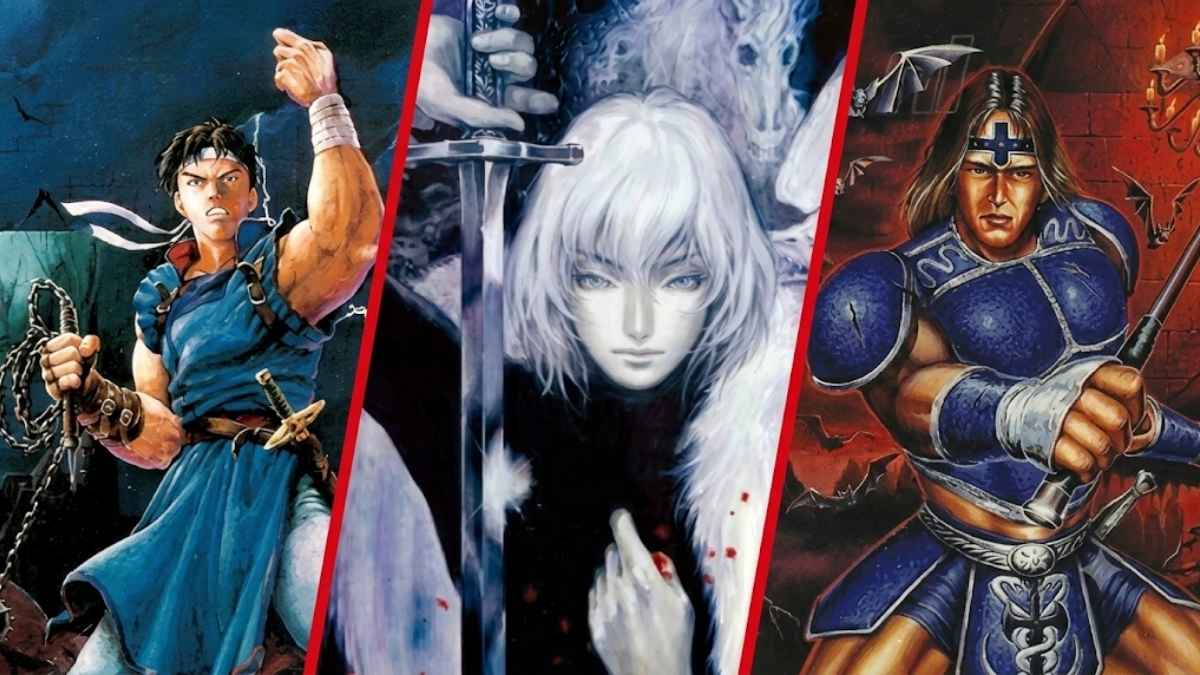

Not all of the best Castlevania games are obvious, and after playing through dozens of entries across NES, GBA, DS, PS1, and everything in between, I can tell you the gap between the best and worst in this series is enormous. This ranking is for anyone who wants to know which of the best Castlevania games are actually worth playing in 2026, whether you’re a longtime fan or someone who just finished the Netflix show and wants to jump in. I’ll walk you through what separates a great Castlevania from a forgettable one, highlight the portable gems that most people sleep on, and explain why, 29 years later, Symphony of the Night still sits alone at the top of every honest Castlevania tier list.
Games You Can Skip (The Bottom Tier)
Not every entry in the Castlevania series is worth your time, and honestly, as someone who’s worked through the entire catalogue, I think it’s my job to save you from wasting an afternoon on the series’ genuine low points. These are the games that even die-hard fans struggle to defend. They’re either broken by design, embarrassingly shallow, or so historically irrelevant that they’ve been wiped from the official timeline entirely. Let me break them down one by one.
A. Haunted Castle: The Notorious Arcade Cash-Grab
| Detail | Info |
|---|---|
| Genre | Arcade Action Platformer |
| Release Year | 1988 |
| Platform | Arcade |
| Time to Beat | ~30 minutes |
Haunted Castle is Konami’s arcade adaptation of the original Castlevania formula, built around a quarter-munching cabinet design rather than thoughtful game construction. Simon Belmont’s adventure is technically recognisable: whip-cracking, candle-smashing, enemy-dodging, but every design choice prioritises draining your wallet over delivering a satisfying experience.
⚠️ Where It Falls Short: The difficulty isn’t challenging; it’s artificially punishing in the way only an arcade cash-grab can be, flooding the screen with enemies and making Simon move like he’s knee-deep in concrete. There’s no compelling reason to seek this out when far superior versions of the same concept exist on home consoles.
🎮 Where To Play In 2026: Haunted Castle is not readily available in any modern official collection, which tells you everything you need to know about how even Konami feels about it.
B. Castlevania: The Adventure and Its Sluggish Gameplay
| Detail | Info |
|---|---|
| Genre | Action Platformer |
| Release Year | 1989 |
| Platform | Game Boy |
| Time to Beat | ~1 hour |
Castlevania: The Adventure is the first portable entry in the franchise, following Christopher Belmont as he takes on Dracula on the original Game Boy. The structure follows the classic linear Castlevania formula, but the Game Boy’s hardware limitations forced painful compromises throughout the game.
⚠️ Where It Falls Short: I’ll be blunt: this is widely considered the worst game to come out of the classic era, and that reputation is completely earned. The Adventure is slow, boring, and mind-numbing. Christopher moves at a glacial pace, the whip upgrade system actively works against the player by resetting on damage, and the level design offers nothing memorable in return for the suffering it inflicts.
🎮 Where To Play In 2026: If curiosity gets the better of you, I’d strongly recommend seeking out the WiiWare remake, Castlevania: The Adventure ReBirth, which corrects most of the original’s sins. However, tracking it down in 2026 is easier said than done.
C. Castlevania Judgment: A Disastrous Fighting Game Spin-Off
| Detail | Info |
|---|---|
| Genre | 3D Fighting |
| Release Year | 2008 |
| Platform | Nintendo Wii |
| Time to Beat | ~4–6 hours |
Castlevania Judgment represents one of the most fascinating concept-versus-execution failures in the entire Castlevania series. The premise, a crossover fighting game starring iconic characters from across the franchise’s timeline, is genuinely exciting on paper. Seeing Simon Belmont, Alucard, and Shanoa in the same roster should have been a celebration of the series’ legacy.
⚠️ Where It Falls Short: The execution is shockingly poor. The developers forced motion controls into a fighting game that desperately needed a traditional control scheme, resulting in a shoddy, unengaging product that fails as both a Castlevania game and a fighting game. The art direction, which redesigned beloved characters into awkward, mismatched visual styles, remains one of the most controversial decisions in the franchise’s history.
🎮 Where To Play In 2026: Castlevania Judgment is exclusive to the original Wii and has not been re-released on any modern platform or collection.
D. Castlevania Legends: An Inferior and Overpriced Game Boy Outing
| Detail | Info |
|---|---|
| Genre | Action Platformer |
| Release Year | 1997 |
| Platform | Game Boy |
| Time to Beat | ~2–3 hours |
Castlevania Legends occupies a strange corner of the franchise’s history. It stars Sonia Belmont, the first female protagonist in the series, giving it a noteworthy place in the lore at least briefly. The game follows the standard Game Boy Castlevania formula and attempts to carve out its own identity through its story and protagonist choice.
⚠️ Where It Falls Short: The story was so disconnected from established Castlevania continuity that Konami eventually retconned it entirely out of the official timeline, which tells you something significant about the game’s standing. Bland level design and mechanics that actively undercut the series’ signature difficulty make this a hard sell, and physical copies command a steep price on the secondary market that the game simply does not justify.
🎮 Where To Play In 2026: Castlevania Legends has not been included in any modern official collection. My honest advice? Don’t spend $50+ tracking down a physical copy; there are far better Castlevania games ranked higher on this list that deserve your money and your time first.
| Game | Platform | Core Problem | Worth Playing? |
|---|---|---|---|
| Haunted Castle | Arcade | Quarter-munching artificial difficulty | No |
| Castlevania: The Adventure | Game Boy | Glacial pace, punishing mechanics | No (try ReBirth instead) |
| Castlevania Judgment | Wii | Failed motion controls, poor fighting gameplay | No |
| Castlevania Legends | Game Boy | Bland design, retconned from canon, overpriced | No |
With the bottom tier firmly established, I think it’s worth noting that even these low points reveal something about what makes the best Castlevania games shine: tight controls, purposeful difficulty, and a distinct identity. Now that we’ve covered the games I’d actively steer you away from, let’s move up the rankings to the entries that had the ambition to try something new, even if the results were mixed.
The Flawed Experiments: Ambitious But Imperfect Entries
A. Castlevania II: Simon’s Quest Bold But Obtuse RPG Design
| Detail | Info |
|---|---|
| Genre | Action RPG / Platformer |
| Release Year | 1987 |
| Platform | NES |
| Time to Beat | ~5–7 hours |
Castlevania II: Simon’s Quest is the franchise’s first serious experiment with open-world RPG mechanics, casting Simon Belmont on a quest to collect Dracula’s scattered body parts and break a death curse. It introduced day/night cycles, townspeople dialogue, and light exploration radical ideas for its era among the best Castlevania games.
⚠️ Where It Falls Short: The game’s cryptic progression is genuinely infamous; NPCs lie to you, and critical puzzle solutions make zero logical sense without a guide. The day/night mechanic, while atmospheric, grinds momentum to a halt every few minutes. It’s the Castlevania entry most likely to make you quit in frustration.
🎮 Where To Play In 2026: Available via the Castlevania Anniversary Collection on Nintendo Switch, PlayStation 4, Xbox One, and PC (Steam).
B. Vampire Killer on MSX: A Historical Footnote Worth Acknowledging
| Detail | Info |
|---|---|
| Genre | Action Platformer |
| Release Year | 1986 |
| Platform | MSX2 |
| Time to Beat | ~3–5 hours |
Vampire Killer is the MSX2 counterpart to the original Castlevania, developed simultaneously by Konami but featuring meaningfully different level designs, item shops, and key-based progression systems. It holds genuine historical significance as a parallel vision of what the series could have become, one rooted in slower, puzzle-adjacent exploration.
⚠️ Where It Falls Short: The MSX2 hardware limitations make this a punishing experience by modern standards. Controls are stiff even by classic Castlevania standards, and the game’s obscurity means there’s almost no community support for newcomers trying to navigate its quirks. Honestly, it functions better as a museum piece than an enjoyable 2026 playthrough.
🎮 Where To Play In 2026: This title has limited modern availability; your best option remains MSX2 emulation, as it has not been included in major Castlevania collections to date.
C. The N64 Castlevania Titles Awkwardly Step Into 3D
Castlevania (Nintendo 64) & Castlevania: Legacy of Darkness
| Detail | Info |
|---|---|
| Genre | 3D Action Adventure |
| Release Year | 1999 (both) |
| Platform | Nintendo 64 |
| Time to Beat | ~8–10 hours |
Castlevania on the N64 and its expanded companion Legacy of Darkness represent Konami’s first attempts to translate the franchise into three dimensions. Legacy of Darkness added protagonist Cornell alongside returning characters, expanded stages, and tightened mechanics over the original N64 release, making it the stronger of the two entries from a design standpoint.
⚠️ Where It Falls Short: The camera system is genuinely hostile; it fights you in every confined corridor and platforming sequence, which are unfortunately the game’s most common scenarios. The controls feel leaden compared to the fluid precision of the 2D classics, and certain sections devolve into trial-and-error frustration that no amount of nostalgia fully redeems. These aren’t among the top Castlevania games to recommend to newcomers, and even fans regularly debate their merits.
🎮 Where To Play In 2026: Both titles remain N64 exclusives; with no official modern re-release physical cartridges or Nintendo 64 emulation are currently your only options.
D. Lords of Shadow 2 Cool Ideas Ruined by Poor Execution
| Detail | Info |
|---|---|
| Genre | Action Adventure / Hack and Slash |
| Release Year | 2014 |
| Platform | PlayStation 3, Xbox 360, PC |
| Time to Beat | ~13–16 hours |
Lords of Shadow 2 concludes the Gabriel Belmont saga, casting the protagonist as Dracula himself in a story spanning medieval and modern settings. The dual-timeline structure and the fantasy of playing as a fully powered vampire lord gave the game genuine ambition, separating it conceptually from standard Castlevania game rankings discussions.
⚠️ Where It Falls Short: The modern-day city sections feel tonally disconnected and mechanically hollow compared to the castle environments; stealth sequences in a Castlevania game are exactly as miserable as they sound. The narrative, despite years of buildup, stumbles badly in its final act, leaving one of gaming’s more intriguing villain redemption arcs feeling unearned. The pacing issues alone are enough to disqualify it from any must-play Castlevania games list.
🎮 Where To Play In 2026: Available digitally on PC via Steam, where it remains the most accessible and best-performing version of the game.
With this in mind, it’s worth acknowledging that each of these flawed experiments contributed something to the series’ DNA, even the ones that stumbled hard. Now that we’ve covered the ambitious misfires, next we’ll look at the solid middle ground: games that may not be legendary, but absolutely deserve your time.
The Solid Middle Ground: Good Games Worth Your Time
These are the Castlevania games that I keep coming back to, not because they’re perfect, but because they each bring something real to the table. They sit comfortably in the middle of my personal tier list: flawed enough to keep them out of the top ranks, but good enough that I’d recommend them to any fan without hesitation. With that in mind, let me walk you through each one.
15. Harmony of Dissonance
| Detail | Info |
|---|---|
| Genre | Metroidvania |
| Release Year | 2002 |
| Platform | Game Boy Advance |
| Time to Beat | ~7–9 hours |
Castlevania: Harmony of Dissonance is the second GBA entry in the Igavania lineage, developed under Koji Igarashi as a direct portable attempt to recapture Symphony of the Night’s dual-castle exploration formula. It introduces Juste Belmont, features a sprawling interconnected map split across two castle dimensions, and employs a furniture-based magic system that adds light strategic variety to combat.
⚠️ Where It Falls Short: The audio is genuinely the worst in any major Castlevania release, compressed, flat, and jarring compared to the series’ legendary soundtracks. The dual-castle structure doubles backtracking without doubling clarity, and the new sprite assets, particularly Juste’s infamous melting-Komondor dash animation, undercut an otherwise ambitious visual effort.
🎮 Where To Play In 2026: Available via the Castlevania Advance Collection on Nintendo Switch, PlayStation 4, Xbox One, and PC (Steam).
14. Mirror of Fate
| Detail | Info |
|---|---|
| Genre | 2.5D Action-Platformer / Metroidvania |
| Release Year | 2013 |
| Platform | Nintendo 3DS |
| Time to Beat | ~8–10 hours |
Castlevania: Lords of Shadow – Mirror of Fate is MercurySteam’s 3DS entry in the Lords of Shadow continuity, following multiple Belmont protagonists across an interwoven narrative set within Dracula’s castle. It is the most Metroidvania-oriented game in the Lords of Shadow trilogy, blending exploration-based progression with the reboot’s signature combat aesthetic and cinematic presentation values.
⚠️ Where It Falls Short: The combat retains the Lords of Shadow franchise’s heavy combo-chain approach, which feels bloated in a 2D context where classic Castlevania always rewarded clean, arcadey movement. Pacing problems compound this; enemy sponge behaviour slows momentum to a crawl in the mid-game stretches. It’s better than its reputation suggests, but the gap between its ambitions and execution is hard to ignore.
🎮 Where To Play In 2026: Available on Nintendo 3DS; an HD version was released on PlayStation 3, Xbox 360, and PC. Check the Steam store for the Lords of Shadow HD entry.
13. Castlevania Chronicles
| Detail | Info |
|---|---|
| Genre | Classic Action-Platformer |
| Release Year | 2001 (PS1 Western release) |
| Platform | PlayStation 1 |
| Time to Beat | ~2–3 hours |
Castlevania Chronicles is a remake of the original Sharp X68000 computer port of Castlevania, originally brought to Western audiences on the PlayStation 1. It offers a foundational, brutally pure take on the classic formula: Simon Belmont, a whip, sub-weapons, and an uncompromising stage-by-stage level structure, with a faithful yet visually refreshed presentation. The game is a direct link to the series’ arcade roots.
⚠️ Where It Falls Short: This is a demanding, archaic experience by design, and players who came to the series through Metroidvanias will likely bounce off its unforgiving old-school structure immediately. It offers very little modern quality-of-life accommodation, and its short runtime means you’re paying for challenge over content. It’s a game made for classic Castlevania devotees, not new converts.
🎮 Where To Play In 2026: Currently one of the harder titles to access legally, not included in major modern collections, so original PS1 hardware or legacy PSN access remains the primary route.
12. Castlevania: Lords of Shadow
| Detail | Info |
|---|---|
| Genre | 3D Action-Adventure |
| Release Year | 2010 |
| Platform | PlayStation 3, Xbox 360 |
| Time to Beat | ~15–18 hours |
Castlevania: Lords of Shadow is MercurySteam and Hideo Kojima’s ambitious 3D reboot of the franchise, repositioning Gabriel Belmont as the series’ protagonist in a sweeping Gothic fantasy epic. Drawing clear inspiration from God of War’s combat design, it delivers strong worldbuilding, a cinematic narrative, and a dark aesthetic that fits the Castlevania universe surprisingly well. For its era, it represented a bold creative gamble.
⚠️ Where It Falls Short: The God of War comparisons aren’t just surface-level; Lords of Shadow leans so heavily on that template that it rarely carves its own identity within combat. Enemy design becomes repetitive throughout the lengthy campaign, and the DLC and sequel content are widely considered significant quality drop-offs from the base game.
🎮 Where To Play In 2026: Available on PC via Steam as Castlevania: Lords of Shadow Ultimate Edition, which includes all DLC content.
Now that I’ve covered the solid middle-ground entries, I want to move into territory where the series truly starts firing on all cylinders: the classic platformers that every fan owes it to themselves to play.
The Classic Platformers Every Fan Should Play
11. The Original Castlevania (NES)
| Detail | Info |
|---|---|
| Genre | Linear Action Platformer |
| Release Year | 1986 |
| Platform | NES |
| Time to Beat | ~45 minutes – 1.5 hours |
Castlevania is the game that defined gothic action-platforming. Simon Belmont’s six-stage journey to defeat Count Dracula introduced the franchise’s signature whip-based combat, tight level design, and a monster-movie aesthetic that would influence gaming for decades. Its soundtrack alone raised the bar for what NES audio could achieve.
⚠️ Where It Falls Short: At only six stages, the game feels remarkably brief by modern standards, and there’s no save or password system, meaning every run starts from scratch. Veterans will blow through it in under an hour, which limits its long-term replay appeal compared to later entries.
🎮 Where To Play In 2026: Available on Nintendo Switch via the Castlevania Anniversary Collection.
Now that I’ve covered the foundation, it’s worth understanding just how dramatically Konami built on it three years later.
10. Castlevania III: Dracula’s Curse (NES)
| Detail | Info |
|---|---|
| Genre | Linear Action Platformer |
| Release Year | 1989 |
| Platform | NES |
| Time to Beat | 3–5 hours (varies by path) |
Dracula’s Curse is the most ambitious NES Castlevania, expanding Trevor Belmont’s quest across multiple branching paths and introducing three companion characters, Sypha, Grant, and Alucard, each altering combat and navigation. Roughly three times larger than the original, it remains a high-water mark for 8-bit action game design.
⚠️ Where It Falls Short: The difficulty is punishing even by Castlevania standards; one particular underground path involving falling blocks used as platforms borders on cruel. New players who jump straight here without playing the original will likely bounce off hard.
🎮 Where To Play In 2026: Available on Nintendo Switch via the Castlevania Anniversary Collection.
With the NES classics firmly established as must-plays, previously I’ve seen a lot of debate about what the 16-bit era brought to the table. Next, I’ll look at the SNES entry that many consider the definitive old-school Castlevania experience.
9. Super Castlevania IV (SNES)
| Detail | Info |
|---|---|
| Genre | Linear Action Platformer |
| Release Year | 1991 |
| Platform | Super NES |
| Time to Beat | 3–4 hours |
Super Castlevania IV is a 16-bit reimagining of Simon Belmont’s original quest, rebuilt from the ground up for SNES hardware. Its defining mechanical addition is the eight-directional whip, letting Simon attack in any direction. Stunning Mode-7 visual effects, a lush atmospheric soundtrack, and polished level variety make it one of the most visually memorable entries in the classic lineup.
⚠️ Where It Falls Short: The eight-directional whip that feels so novel actually breaks the game’s challenge wide open; many enemy encounters become trivial once you realise you can simply whip in any direction without repositioning. The difficulty level is also noticeably lower than its NES predecessors, which veteran fans may find underwhelming.
🎮 Where To Play In 2026: Available on Nintendo Switch via the Castlevania Anniversary Collection.
Super Castlevania IV regularly features on our list of the best SNES games of all time if 16-bit classics are your thing; that guide is essential reading.
8. Castlevania: Bloodlines (Sega Genesis)
| Detail | Info |
|---|---|
| Genre | Linear Action Platformer |
| Release Year | 1994 |
| Platform | Sega Genesis / Mega Drive |
| Time to Beat | 1–2 hours |
Bloodlines stands as the franchise’s sole Sega Genesis outing and one of its most distinctive entries. Set in the early 20th century and spread across globe-trotting locales far beyond Dracula’s castle, it offered two playable characters from the start: whip-wielding John Morris and spear-armed Eric Lecarde, each with a meaningfully different play style. Creative hardware-pushing technical tricks are woven directly into the level design.
⚠️ Where It Falls Short: At only six levels, Bloodlines is over quickly and lacks the sustained depth of its best contemporaries. The limited continues, and three difficulty settings add some replayability, but the short runtime keeps it from reaching the top tier of classic Castlevania games.
🎮 Where To Play In 2026: Available on Nintendo Switch via the Castlevania Anniversary Collection.
With this in mind, next I’ll cover what many hardcore fans consider the pinnacle of the pre-Symphony era: a game that was so ahead of its time it spent years locked away as a Japan-only release.
7. Castlevania: Rondo of Blood (PC Engine)
| Detail | Info |
|---|---|
| Genre | Linear Action Platformer |
| Release Year | 1993 |
| Platform | PC Engine / TurboGrafx-16 |
| Time to Beat | 2–3 hours |
Rondo of Blood is the definitive classic Castlevania experience, synthesising everything the series had built across seven years into one flawless package. Two playable characters, multiple branching stage paths, a CD-quality gothic-jazz soundtrack, animated cutscenes, and stage design layered with secrets and alternate routes make it the benchmark against which every other linear Castlevania is measured.
⚠️ Where It Falls Short: For years, Rondo was essentially inaccessible to Western players; originally a Japan-exclusive PC Engine CD-ROM release, it remained a rare, expensive import for over a decade. Even today, reaching the best version still requires navigating among collection options, which can frustrate newer fans looking for a straightforward entry point.
🎮 Where To Play In 2026: The original version is accessible via the Castlevania Requiem collection on PlayStation 4, which bundles it alongside Symphony of the Night.
Here’s a quick reference for everything covered in this section:
| Rank | Game | Platform | Key Feature | Time to Beat |
|---|---|---|---|---|
| #11 | Castlevania (NES) | NES | Foundation of the franchise | ~1 hour |
| #10 | Dracula’s Curse | NES | Branching paths + companions | 3–5 hours |
| #9 | Super Castlevania IV | SNES | 8-directional whip, 16-bit visuals | 3–4 hours |
| #8 | Bloodlines | Genesis | Globe-trotting, dual protagonists | 1–2 hours |
| #7 | Rondo of Blood | PC Engine | Branching stages, CD audio, peak design | 2–3 hours |
Every one of these classic Castlevania platformers belongs in the conversation about the best Castlevania games of all time. Still, as the rankings make clear, some come far closer to perfection than others.
The Portable Gems That Deserve More Recognition
When people think of the best Castlevania games of all time, they usually jump straight to Symphony of the Night, and I get it. But some of the most impressive work this franchise has ever produced happened on tiny screens in people’s palms. These portable entries aren’t runner-ups to the console games; in many cases, they are the console games in terms of quality. Let me walk you through the five portable gems that I believe every serious fan needs to play.
#6. Castlevania II: Belmont’s Revenge — A Surprisingly Ambitious Effort on Game Boy
| Detail | Info |
|---|---|
| Genre | Linear Action Platformer |
| Release Year | 1991 |
| Platform | Game Boy |
| Time to Beat | ~2 Hours |
Castlevania II: Belmont’s Revenge is the direct sequel to the original Game Boy Castlevania, following Christopher Belmont as he fights to rescue his son Soleil from Dracula. It introduces sub-weapons, holy water, and axes, and features a stage-select structure reminiscent of Mega Man, with distinct biome-themed levels, including plant, crystal, and earth zones.
⚠️ Where It Falls Short: The game is genuinely short, even by Game Boy standards, and Christopher’s movement still feels sluggish compared to later entries. It’s a significant improvement over its predecessor, but it’s not chasing complexity; it’s a lean, tight experience that ends almost before you realise it started.
🎮 Where To Play In 2026: Available on the Castlevania Anniversary Collection for PC, PlayStation 4, Xbox One, and Nintendo Switch.
I put Belmont’s Revenge at #6 not because it’s a minor entry, but because what sits above it is genuinely that good. This Game Boy sequel earned an 83.5/100 from critics, an impressive score for a handheld game of its era, and it still holds up as one of the best Game Boy action games ever made. The variety of stages alone makes it worth revisiting.
#5. Castlevania: Circle of the Moon — The GBA’s First Metroidvania
| Detail | Info |
|---|---|
| Genre | Metroidvania |
| Release Year | 2001 |
| Platform | Game Boy Advance |
| Time to Beat | ~10–12 Hours |
Circle of the Moon is the first Castlevania Metroidvania since Symphony of the Night, launching alongside the Game Boy Advance in 2001. Players control Nathan Graves, who wields the Hunter Whip and collects Dual Set-up System (DSS) cards from enemies to infuse it with elemental powers. Non-linear exploration, RPG-style levelling, and gear progression define its core loop.
⚠️ Where It Falls Short: The GBA’s original screen was notoriously dark, and Circle of the Moon’s moody visuals suffered badly for it, making the game genuinely difficult to see without a backlit screen. Nathan’s movement starts painfully slow before the boot upgrade, and the card-drop system relies heavily on RNG grinding.
🎮 Where To Play In 2026: Available on the Castlevania Advance Collection for PC, PlayStation 4, Xbox One, and Nintendo Switch.
With this in mind, it’s worth noting that Circle of the Moon earned an impressive 88.32/100 from critics, actually higher than several entries that came after it. It’s a strong Metroidvania debut on handheld, and now that modern screens make it properly visible, it reads differently than it did in 2001. This is one of those cases where the port genuinely improves the game.
#4. Castlevania: Dawn of Sorrow A Rare Direct Sequel and DS Powerhouse
| Detail | Info |
|---|---|
| Genre | Metroidvania |
| Release Year | 2005 |
| Platform | Nintendo DS |
| Time to Beat | ~10–12 Hours |
Dawn of Sorrow is a direct sequel to Aria of Sorrow, reuniting protagonist Soma Cruz one year after the events of the GBA title. It was the inaugural DS Castlevania entry and expanded Aria’s soul-absorption system with monster soul upgrades and weapon crafting. Dual screens provided a persistent, readable map, a significant quality-of-life improvement over earlier entries.
⚠️ Where It Falls Short: The anime-inspired character designs replaced celebrated artist Ayami Kojima’s gothic artwork, and the backlash from fans was real and justified; the aesthetic shift felt jarring for a series defined by its atmosphere. The DS touch-screen mechanics for sealing bosses were a gimmick that added friction without depth.
🎮 Where To Play In 2026: Available on the Castlevania Dominus Collection for PC, PlayStation 4, Xbox One, and Nintendo Switch.
Dawn of Sorrow topped the handheld rankings with a 90.35/100 critic score, making it the highest-reviewed portable Castlevania game by the numbers. I’d argue those scores are earned; the core gameplay is exceptional, but the art direction controversy is the one criticism I think deserves more than a footnote in most reviews. It’s a genuine flaw in an otherwise excellent game.
#3. Castlevania: Order of Ecclesia — The Bold and Divisive Finale of the DS Trilogy
| Detail | Info |
|---|---|
| Genre | Metroidvania / Action RPG |
| Release Year | 2008 |
| Platform | Nintendo DS |
| Time to Beat | ~12–15 Hours |
Order of Ecclesia stars Shanoa, a warrior who absorbs Glyphs from enemies and the environment to wield weapons, magic, and traversal abilities. The Glyph system allows for simultaneous equipping of two, enabling fast, creative combo play. As the final 2D Castlevania of the Koji Igarashi era, it carries significant historical weight as the closing chapter of the DS trilogy.
⚠️ Where It Falls Short: The main castle section feels comparatively short for a Metroidvania, with a heavy portion of the game spent in external village-based side quests that feel disconnected from the core experience. The difficulty spike is real and punishing; some players will bounce off it hard.
🎮 Where To Play In 2026: Available on the Castlevania Dominus Collection for PC, PlayStation 4, Xbox One, and Nintendo Switch.
Order of Ecclesia is the most divisive entry on this list, and I think that reputation is part of what makes it fascinating. Critics scored it 85.67/100, solid but lower than Dawn of Sorrow and Aria of Sorrow. The bold design choices, particularly the Glyph system and the greater difficulty, are exactly what make it worth playing, even if they’re also what make some players walk away frustrated. As the last game Koji Igarashi produced before eventually creating Bloodstained as a spiritual successor, Order of Ecclesia is a genuinely important piece of gaming history.
#2. Castlevania: Aria of Sorrow — The GBA Entry That Rivals Symphony of the Night
| Detail | Info |
|---|---|
| Genre | Metroidvania |
| Release Year | 2003 |
| Platform | Game Boy Advance |
| Time to Beat | ~8–10 Hours |
Aria of Sorrow is the third and final GBA Castlevania, set in 2035 Japan and following Soma Cruz, a foreign exchange student drawn into Dracula’s resurfaced castle. Its defining mechanic, absorbing enemy souls to gain their abilities offensively, defensively, and passively, represented one of the most significant gameplay innovations in the series since Symphony of the Night.
⚠️ Where It Falls Short: The game is genuinely short for the genre, and experienced Metroidvania players will blow through it faster than they’d like. The futuristic Japan setting, while conceptually bold, never quite gets the visual payoff it deserves on GBA hardware.
🎮 Where To Play In 2026: Available on the Castlevania Advance Collection for PC, PlayStation 4, Xbox One, and Nintendo Switch.
Previously, I’ve seen games earn the “rivals Symphony of the Night” label without quite backing it up, but Aria of Sorrow earns it. It scored 87.86/100 from critics and is consistently cited as one of the best GBA games ever made, full stop. The soul-absorption system is genuinely creative, and Soma Cruz’s story is compelling enough to have directly prompted a sequel, something that rarely happens in this franchise.
What impresses me most about this portable lineup is how consistently excellent it is. From a Game Boy sequel in 1991 to a DS finale in 2008, these games weren’t scaled-down versions of console experiences; they were the gold standard for 2D action RPGs on any platform during their respective eras. Now that collections like the Castlevania Advance Collection and Castlevania Dominus Collection have made them more accessible than ever, there’s no better time to work through all five.
#1 Castlevania: Symphony of the Night “29 Years Later, Nothing Has Come Close”
I’ve played through virtually every entry in this franchise, and I keep arriving at the same conclusion: Castlevania: Symphony of the Night is untouchable. It’s not just the best Castlevania game; it’s one of the best video games ever made, full stop. After covering the solid middle-ground entries and the portable gems that deserve more recognition, this is where every ranking conversation has to end.
Castlevania: Symphony of the Night: The Game That Defined a Genre
| Detail | Info |
|---|---|
| Genre | Action RPG / Metroidvania |
| Release Year | 1997 |
| Platform | PlayStation (Original) |
| Time to Beat | ~10–20 hours (depending on completion percentage) |
Castlevania: Symphony of the Night is a 2D action-RPG in which players control Alucard, Dracula’s dhampir son, as he explores a non-linear, interconnected castle to stop Dracula from reclaiming power. It introduced deep RPG mechanics experience points, levelling, attribute stats, familiars, and a sprawling inventory into the Castlevania formula, directly inspired by The Legend of Zelda and Super Metroid. Composer Michiru Yamane’s genre-spanning soundtrack, blending classical, gothic rock, jazz, and metal, and artist Ayami Kojima’s bishounen-influenced character designs gave the game an atmosphere no entry in the series has since replicated.
Why Symphony of the Night Changed Everything
What I find most remarkable about this game, even after all these years, is how deliberate every design choice feels. The development team, led by Toru Hagihara, with Koji Igarashi contributing to the story and programming, originally began work on a cancelled 32X project called Castlevania: The Bloodletting before pivoting to what would become Symphony of the Night. That pivot produced something genuinely generational.
The castle itself is the game’s greatest achievement. It is non-linear by design, and your ability to progress through it depends entirely on the items and abilities you acquire, including Alucard’s shapeshifting transformations into a bat, wolf, or mist. This creates a sense of discovery that few games, before or since, have matched. Every room you unlock feels earned.
The RPG layer’s hit points, magic points, strength, constitution, intelligence, and luck add genuine strategic depth without overwhelming the player. You’re not just slashing through enemies; you’re curating a build, selecting from a wide variety of weapons, equipping familiars, and learning spells. It’s a system that rewards curiosity and experimentation, and it’s one I’ve returned to dozens of times without growing tired of it.
The Numbers Behind the Legend
| Detail | Information |
|---|---|
| Developer | Konami Computer Entertainment Tokyo |
| Director | Toru Hagihara |
| Composer | Michiru Yamane |
| Original Release (Japan) | March 20, 1997 |
| North America Release | October 3, 1997 |
| Units Sold (US + Japan) | ~703,166 |
| Awards | EGM PlayStation Game of the Year, Side-Scrolling Game of the Year |
Here’s what I find fascinating from a historical standpoint: Symphony of the Night was initially a sleeper hit. It sold modestly at launch during a period dominated by the transition to 3D gaming, then gained momentum almost entirely through word of mouth. That organic rise to legendary status tells you something important: this game earned its reputation through sheer quality, not marketing.
⚠️ Where It Falls Short: The English voice acting in the original PlayStation localisation is famously, almost legendarily bad and while some fans have embraced it as camp charm, it genuinely undercuts the story’s dramatic moments. The inverted castle second half, while a clever structural idea, is noticeably thinner in terms of enemy and environment variety compared to the first half, and it can feel like padding once you recognise the pattern. The Xbox Live Arcade port (2007) also launched with FMV sequences stripped out, which was a frustrating omission for returning fans.
🎮 Where To Play In 2026: I recommend playing it through Castlevania Requiem: Symphony of the Night & Rondo of Blood, available on PlayStation 4, which includes updated features and the bonus playable Maria Renard.
If Symphony of the Night has you craving more PS1 classics, we have a full breakdown of the best PS1 games of all time that’s worth bookmarking.
My Final Verdict
After ranking every major entry across this entire list from the games you can safely skip to the ambitious-but-flawed experiments, Symphony of the Night stands alone at the top not because of nostalgia, but because its design philosophy holds up under scrutiny. The non-linear exploration, the RPG depth, Michiru Yamane’s extraordinary soundtrack, Ayami Kojima’s iconic art direction: every element reinforces the others. It is a game built with intention, and 29 years later, nothing in the Castlevania series or the broader Metroidvania genre it helped define has fully surpassed it. If you play only one Castlevania game in your life, this is the one.
The Best Castlevania Collections for Modern Players
A. Castlevania Anniversary Collection: Eight Classics in One Package
| Detail | Info |
|---|---|
| Genre | Action Platformer |
| Release Year | 2019 |
| Platform | Nintendo Switch, PS4, Xbox One, PC |
| Time to Beat | 20–40 hours (all eight games) |
The Castlevania Anniversary Collection bundles eight foundational entries from the series into a single, affordable package. It covers the NES era through the Game Boy era, offering a comprehensive snapshot of how the franchise evolved across its earliest decades. The collection includes the original Castlevania, Castlevania II: Simon’s Quest, Castlevania III: Dracula’s Curse, Super Castlevania IV, Castlevania: The Adventure, Castlevania II: Belmont’s Revenge, Castlevania: Bloodlines, and Kid Dracula.
⚠️ Where It Falls Short: The emulation is functional but unremarkable; don’t expect the polish that M2 brings to its compilations. Some of the Game Boy entries are genuinely rough experiences, and the collection doesn’t do enough to contextualise them for newcomers.
🎮 Where To Play In 2026: Available on Nintendo Switch, PS4, Xbox One, and PC as a standalone digital purchase.
Now that I’ve covered the anniversary collection, let me move on to what I consider a more focused and arguably more essential package for fans of the Metroidvania formula.
B. Castlevania Advance Collection: Essential for Metroidvania Fans
| Detail | Info |
|---|---|
| Genre | Metroidvania |
| Release Year | 2021 |
| Platform | Nintendo Switch, PS4, Xbox One, PC |
| Time to Beat | 20–30 hours (all four games) |
The Castlevania Advance Collection brings together four Metroidvania-style entries: Circle of the Moon, Harmony of Dissonance, Aria of Sorrow, and Dracula X, all of which originally appeared on Game Boy Advance. These games represent the series at its most inventive on portable hardware, each offering deep exploration mechanics, RPG-lite progression, and some of the most memorable sprite artwork in the franchise.
⚠️ Where It Falls Short: Including Dracula X as the fourth title feels like padding; it’s a weaker port of Rondo of Blood and sticks out badly next to three genre masterpieces. Newcomers may not realise that going in.
🎮 Where To Play In 2026: Available on Nintendo Switch, PS4, Xbox One, and PC as a standalone digital purchase.
With this in mind, next I’ll look at a collection that goes a step further by hiding two legendary games behind an unlockable system that is either charming or frustrating, depending on your patience.
C. The Dracula X Chronicles on PSP: Two Legendary Games as Unlockables
| Detail | Info |
|---|---|
| Genre | Action Platformer / Metroidvania |
| Release Year | 2007 |
| Platform | PlayStation Portable (PSP) |
| Time to Beat | 6–15 hours (including unlockables) |
The Dracula X Chronicles is a PSP remake of Rondo of Blood, presented in 2.5D with updated visuals and voice acting. What makes it historically significant is what it hides inside: both the original Rondo of Blood and Symphony of the Night are unlockable within the package. For many Western players, this PSP release was their first legal access to Rondo of Blood, which had never received an official North American release prior.
⚠️ Where It Falls Short: The remake itself is competent, but the original Rondo of Blood you unlock is simply better in almost every way. Locking two superior games behind unlockables feels like a strange design decision that prioritises the weaker product.
🎮 Where To Play In 2026: Available as a digital purchase on PSP; physical copies are collectable but increasingly expensive.
Previously, I’ve pointed to the PSP as a surprisingly important platform for the series. That theme continues with the next entry, which makes two of the best Castlevania games ever made more accessible than ever.
D. Castlevania Requiem on PS4: The Easiest Way to Play Two Masterpieces
| Detail | Info |
|---|---|
| Genre | Action Platformer / Metroidvania |
| Release Year | 2018 |
| Platform | PlayStation 4 |
| Time to Beat | 10–20 hours (both games) |
Castlevania Requiem packages Rondo of Blood and Symphony of the Night into a single PS4 release, making these two iconic titles more accessible than they have ever been on a home console. Rondo of Blood receives a clean port of the original PC Engine version, while Symphony of the Night uses the updated PSP translation. Together, they represent the artistic and mechanical peak of the classic Castlevania era.
⚠️ Where It Falls Short: This is a PS4 exclusive with no announced ports to Switch, Xbox, or PC, which artificially limits its audience. The Symphony of the Night translation used here is also not the original 1997 script, which some purists will rightfully resent.
🎮 Where To Play In 2026: Available exclusively on PlayStation 4 and PlayStation 5 (via backward compatibility) through the PlayStation Store.
E. Haunted Castle Revisited: How M2 Redeemed a Terrible Game
| Detail | Info |
|---|---|
| Genre | Action Platformer |
| Release Year | 2024 |
| Platform | Nintendo Switch, PS4, PS5, Xbox Series X/S, Xbox One, PC (via Castlevania Dominus Collection) |
| Time to Beat | 1–2 hours |
Haunted Castle Revisited is a full remake of the notoriously brutal 1988 arcade original, developed by M2 and released on August 27, 2024, as part of the Castlevania Dominus Collection. M2 reimagined the source material with modern quality-of-life improvements while preserving the gothic tone and stage structure. The original Haunted Castle was largely considered unplayable by most fans; this remake changes that equation entirely.
⚠️ Where It Falls Short: The base experience is short enough to feel slight, even with the remake treatment. Those expecting a dramatic reinvention may find M2’s faithful approach underwhelming rather than redemptive.
🎮 Where To Play In 2026: Included in Castlevania Dominus Collection, available on Nintendo Switch, PS4, PS5, Xbox One, Xbox Series X/S, and PC.
Here’s a quick reference table to help you choose the right collection based on your platform and priorities:
| Collection | Key Games Included | Platforms | Best For |
|---|---|---|---|
| Anniversary Collection | 8 classic titles including NES & SNES entries | Switch, PS4, Xbox, PC | Series newcomers & history buffs |
| Advance Collection | Circle of the Moon, Aria of Sorrow, Harmony of Dissonance, Dracula X | Switch, PS4, Xbox, PC | Metroidvania fans |
| Dracula X Chronicles | Rondo of Blood remake + 2 unlockables | PSP | Collectors & handheld players |
| Castlevania Requiem | Rondo of Blood + Symphony of the Night | PS4 / PS5 | Players who want the best two games |
| Dominus Collection (incl. Revisited) | DS trilogy + Haunted Castle Revisited | Switch, PS4, PS5, Xbox, PC | Modern players & completionists |
Choosing the Right Castlevania Game for Your Play Style
Best Entry Point for Newcomers to the Series
If you’ve made it this far through my rankings and you’re itching to pick up a controller finally, the question I’m asked most is: Where do I start? My honest answer is Castlevania: Symphony of the Night. Yes, it’s also my pick for the best Castlevania game of all time, but that’s precisely the point: it’s forgiving enough in its early hours, packed with RPG systems that ease you into combat, and the sheer volume of items and builds means you’re rarely stuck without options. It set the template for every Metroidvania that followed, and playing it first gives you an instant reference point for everything else in the series.
What I’d strongly steer newcomers away from is the original 1987 Castlevania. The knockback-into-pit-trap deaths, the stiff controls, the relentless “Nintendo Hard” difficulty none of that is fun if you don’t already love the franchise. Same goes for Castlevania: Order of Ecclesia, which is a masterpiece, but its boss difficulty rivals FromSoftware at its most punishing. Save that one for later.
Top Picks for Fans of Classic Action Platformers
Now that I’ve covered the newcomer angle, let me speak to the players who grew up with Mega Man, Contra, and the original Mario trilogy people who want a stiff challenge and tight level design.
For you, I point directly to Super Castlevania IV. Released in 1991 on the Super Nintendo, it’s a refined retelling of Simon Belmont’s first battle with Dracula, fixing every frustration of the original while keeping the gothic atmosphere razor-sharp. The controls are responsive, the stage design is inventive, and it still holds up visually thanks to its iconic Mode 7-era aesthetic.
Castlevania: Rondo of Blood is my other must-play in this category. Richter Belmont’s debut is arguably the best pure 2D side-scroller in the entire series; it features branching paths, multiple playable characters, and a refinement of the action-platformer formula that the series never quite topped in this style. You can play it today through the Castlevania: Requiem collection on PS4/PS5, which conveniently bundles it with Symphony of the Night.
One game I’d tell action-platformer fans to skip: Castlevania: Dracula X on SNES. It’s a watered-down port of Rondo of Blood that strips out everything interesting the alternate character, the branching stages and cranks up the difficulty for no reason. With Rondo of Blood finally available in English, there’s zero justification for playing the inferior version.
Essential Metroidvania Titles for Exploration Lovers
If what draws you to Castlevania is the idea of a sprawling, interconnected castle map filled with secrets, upgrades, and gradual power progression, then you’re looking for the Metroidvania side of the series. Previously, I’ve talked at length about Symphony of the Night, but let me highlight two more entries that exploration-focused players will love.
Castlevania: Dawn of Sorrow on the Nintendo DS is one of my top recommendations in this category. Soma Cruz’s soul-stealing mechanic, where you absorb monster abilities by defeating them, creates a constantly evolving power set that makes exploration feel genuinely rewarding. The map is expansive, the game is forgiving by series standards, and it’s one of the most content-rich portable Castlevania experiences ever made.
Castlevania: Harmony of Dissonance on Game Boy Advance is another title I’d push exploration lovers toward. It’s not as epic in scope as Symphony of the Night, but it delivers a tight, bite-sized Metroidvania experience that’s far more accessible than many of its peers. The gameplay holds up well even if the visuals show their GBA limitations.
| Game | Platform | Best For | Difficulty |
|---|---|---|---|
| Symphony of the Night | PS1/PS4/Xbox | All exploration fans | Moderate |
| Dawn of Sorrow | Nintendo DS | RPG + exploration blend | Moderate |
| Harmony of Dissonance | GBA | Compact Metroidvania intro | Easy–Moderate |
| Order of Ecclesia | Nintendo DS | Veteran explorers only | Very Hard |
Best Options for Players on a Budget
With this in mind, let’s talk about getting the most Castlevania value for your money in 2026. The single best budget option available right now is the Castlevania Anniversary Collection, which bundles eight classic titles in one package and regularly goes on sale for under $10 across PlayStation, Xbox, Nintendo Switch, and PC. For pure volume of content, it’s unbeatable.
For PlayStation owners specifically, the Castlevania: Requiem collection offers both Rondo of Blood and Symphony of the Night in one package, two of the finest games in the series for a budget-friendly price. That’s an extraordinary value-to-quality ratio that I’d recommend to anyone who owns a PS4 or PS5.
The portable Metroidvania titles Dawn of Sorrow, Harmony of Dissonance, and even Order of Ecclesia are also available through the Castlevania Advance Collection on modern platforms, again frequently discounted. If you want the best Castlevania games ranked by value, these collections are genuinely hard to argue with.
Modern Alternatives Like Dead Cells: Return to Castlevania
Finally, if you’ve absorbed everything I’ve covered and you’re still not sure the classic formula is for you, I’d point you toward Dead Cells: Return to Castlevania, a DLC expansion for the excellent roguelite Dead Cells that serves as a love letter to the entire franchise. It incorporates Castlevania’s iconic monsters, locations, characters, and music into Dead Cells’ fast, fluid combat system, creating something that feels both fresh and deeply nostalgic.
It’s not a replacement for playing the actual series. Still, it’s a phenomenal on-ramp, especially for players who prefer modern game feel over the deliberate, methodical pacing of the originals. If you play it and find yourself wanting more of that gothic atmosphere and monster-hunting action, that’s exactly the moment to go back and start with Symphony of the Night.
Conclusion
The Castlevania series has given us some of gaming’s most memorable moments, from the punishing but rewarding corridors of the original NES classic to the sprawling, item-filled depths of Symphony of the Night. Having ranked these 15 games, I can say with confidence that the series has far more hits than misses, even if some experiments like Castlevania Judgment and Lords of Shadow 2 stumbled along the way. The portable gems like Aria of Sorrow and Belmont’s Revenge deserve far more attention than they typically get, and the modern collections, particularly the Castlevania Advance Collection and Castlevania Dominus Collection, make it easier than ever to experience the best the series has to offer.
If I had to point anyone to a single starting place, it would always be Castlevania: Symphony of the Night. Nearly 30 years after its release, nothing in the franchise has matched its scope, presentation, or sheer brilliance. But whether you’re a newcomer looking for the easiest entry point, a classic platformer fan drawn to Super Castlevania IV, or a Metroidvania enthusiast ready to dive deep into the DS trilogy, there’s a Castlevania game perfectly suited to your play style. My advice? Start wherever feels right, but don’t stop until you’ve played Symphony of the Night.
Frequently Asked Questions
What is the best Castlevania game to start with as a beginner?
Castlevania: Symphony of the Night is the most recommended starting point for newcomers. Its RPG mechanics ease you into combat gradually, the difficulty is moderate compared to other entries, and it’s widely available through the Castlevania Requiem collection on PS4 and PS5. If you prefer a pure action platformer first, Super Castlevania IV on SNES is the more forgiving classic-style entry: responsive controls, iconic Mode 7 visuals, and no save-system frustration.
Is there a new Castlevania game coming in 2026?
Yes. Castlevania: Belmont’s Curse launches October 15, 2026 for PlayStation 5, Xbox Series X/S, and PC, with a Nintendo Switch version also planned for later in 2026. It is the first new console entry in the franchise since Lords of Shadow 2 in 2014, and the first traditional 2D instalment in the series’ original timeline since Order of Ecclesia in 2008. Nintendo Wire KONAMI
Who is the protagonist of Castlevania: Belmont’s Curse?
Players control Rose Belmont, the daughter of Trevor Belmont, as monstrous creatures overrun Paris and a mysterious castle looms over the city. The game is being developed by Evil Empire and Motion Twin, who previously collaborated with Konami on the Dead Cells: Return to Castlevania expansion. Nintendo Wire The Escapist
What is the difference between classic Castlevania and Metroidvania Castlevania?
Classic Castlevania, covering the NES, SNES, and PC Engine entries, is a linear stage-by-stage action platformer. You move forward, fight enemies, reach a boss, and progress. Metroidvania Castlevania, beginning with Symphony of the Night in 1997, replaces that structure with a large, interconnected castle map in which exploration, backtracking, and ability-gating unlock new areas over time. RPG mechanics such as levelling, equipment, and skill trees are central to Metroidvania titles.
Which Castlevania collections are available on modern platforms in 2026?
Three major collections cover the majority of the series. The Castlevania Anniversary Collection (Switch, PS4, Xbox, PC) includes eight classic titles from the NES and Game Boy eras. The Castlevania Advance Collection (Switch, PS4, Xbox, PC) covers the four GBA entries including Aria of Sorrow and Circle of the Moon. The Castlevania Dominus Collection (Switch, PS4, PS5, Xbox, PC) bundles the DS trilogy Dawn of Sorrow, Portrait of Ruin, and Order of Ecclesia alongside Haunted Castle Revisited. For Symphony of the Night and Rondo of Blood specifically, Castlevania Requiem on PS4 and PS5 remains the best option.
Why was Castlevania: Legends removed from official Castlevania canon?
Koji Igarashi, who served as series producer throughout the Igavania era, officially retconned Castlevania Legends from the franchise timeline. The game’s story, which established Sonia Belmont as the first Belmont to battle Dracula and introduced a romantic subplot involving Alucard, conflicted with the established lore Igarashi was developing across Symphony of the Night and the GBA era. Its removal effectively erased Sonia Belmont from official Castlevania history, making the game a historical footnote rather than a meaningful entry in the franchise.
How long does it take to beat Symphony of the Night?
A standard playthrough of Castlevania: Symphony of the Night runs approximately 10 to 12 hours for players targeting the normal ending. Reaching the true ending, which requires discovering the inverted castle, takes 15-20 hours. Completionists aiming for 200% map completion and all equipment can push the runtime past 20 hours. The game’s open-ended structure means experienced players can finish in under 5 hours, while first-timers exploring freely will land closer to the 15-hour mark.


Leave a Reply