
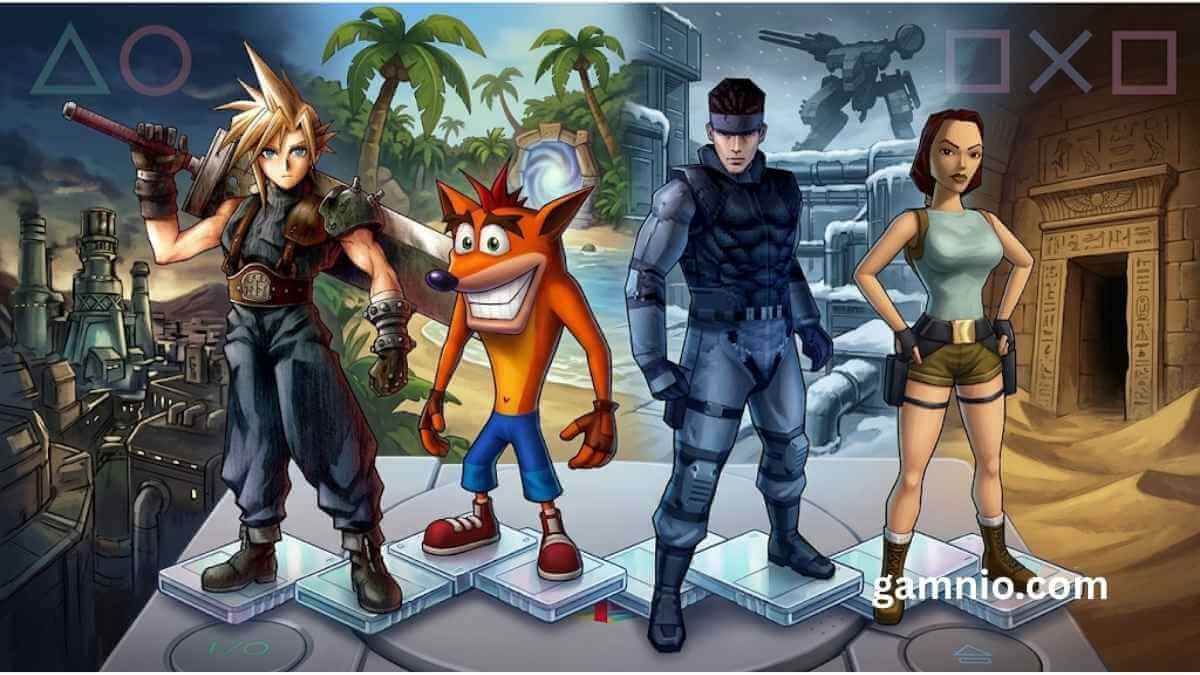

The original PlayStation didn't just launch a console in 1994—it completely reshaped what video games could become. From its iconic startup sound to the sprawling libraries of classic PS1 RPGs and action adventures, this grey box brought gaming out of the arcade and into living rooms with a cinematic ambition that still resonates today. Narrowing down the best PS1 games of all time to just 25 titles is a genuinely painful exercise, because the console's catalogue runs thousands deep. Every game on this list earned its place through lasting quality, cultural impact, and the simple fact that it still feels worth playing in 2026.
Whether you grew up clutching a DualShock or you're discovering these retro PlayStation games for the first time, this guide covers the absolute essentials—plus a few PS1 hidden gems that deserve far more attention than they got at launch. You'll find RPGs that defined storytelling, fighting games that demanded mastery, racing sims that raised the bar, and adventure titles that haven't aged a day. Let's dive in.
Why the PS1 Still Matters in 2026
The Console That Changed Everything
The PlayStation arrived in Japan on December 3, 1994, and reached North America less than a year later. At the time, Nintendo and Sega dominated the market with cartridge-based systems. Sony walked in with CD-ROM technology, a sleek design, and a developer-friendly approach that attracted third-party studios in droves. By the end of its lifecycle, Sony had shipped over 102 million units worldwide—the first console ever to break that milestone.
What made the PS1 revolutionary wasn't just the hardware specs. CDs offered up to 700MB of storage, which meant developers could include full-motion video, orchestral soundtracks, voice acting, and longer, more complex narratives. Games stopped feeling like extended arcade sessions and started feeling like interactive movies. The 3D graphics were blocky by modern standards, sure, but at the time, seeing Lara Croft navigate a tomb or Cloud Strife stand in Midgar felt like witnessing the future.
The PS1 also democratised development. It was affordable to create for, which meant small studios and big publishers alike flooded the platform with creative risk-taking. That's exactly why the library became so deep, varied, and packed with classics that still hold up today.
How These 25 Games Were Selected
Every game on this list had to meet at least three of four criteria:
- Replay value — Does it still feel good to play right now, without nostalgia goggles?
- Cultural impact — Did it influence the industry, genres, or players in a meaningful way?
- Genre-defining moments — Did it introduce mechanics or design ideas that later games copied?
- Emotional staying power — Does it still resonate when you think about it years later?
I cross-referenced critical reception from the era, looked at long-term community discussions, and considered how well each title has aged. Where my personal favourites didn't quite meet the objective bar, I've noted them as honourable mentions rather than forcing them in. This list spans action, RPGs, fighting games, racing, platformers, stealth, and horror—because the best PS1 games aren't all blockbusters. Some of the most inventive experiences were PS1 hidden gems that quietly introduced ideas the entire industry eventually built on.
The 25 Best PS1 Games of All Time
25. PaRappa the Rapper
A flat, paper-thin cartoon dog rapping about onions and driving lessons. It made no sense, and I was hooked within thirty seconds. PaRappa the Rapper basically invented the rhythm game genre as we know it today.
The gameplay is deceptively simple: follow the instructor's rap lines and hit the corresponding buttons in time with the beat. Getting a COOL rating, which unlocks PaRappa's freestyle mode, requires genuine timing and feel. The game rewards players who actually listen to the music rather than just button-mash.
What makes PaRappa genuinely special is the personality crammed into every corner: Masaaki Kubota's collage-style art direction, Yoshihiro Ike's absurdly catchy soundtrack, and a surprisingly sweet story about a dog trying to impress a sunflower girl. Without it, there's no Guitar Hero, no Dance Dance Revolution finding mainstream audiences, and no Rock Band.
24. Tenchu: Stealth Assassins

Before Metal Gear Solid made stealth gameplay a household concept, Tenchu: Stealth Assassins dropped in 1998 and showed everyone what it actually felt like to be a real ninja—not a button-mashing warrior, but a patient predator perched on a rooftop, watching a guard's patrol pattern, dropping silently behind them, and executing a flawless stealth kill. That satisfaction never got old.
Tenchu introduced a fully 3D stealth system before most developers had even figured out 3D movement. The Ki Meter let you gauge enemy awareness in real time. The toolkit included smoke bombs, caltrops, poison rice, and shuriken, each with genuine tactical purpose. Two playable characters—Rikimaru the disciplined swordsman and Ayame the fast acrobat—offered distinct playstyles that encouraged replaying levels. The camera can be a nightmare, and the AI has quirks, but for its era, Tenchu was a jaw-dropping achievement that deserves far more recognition in conversations about the best PS1 games ever.
23. Oddworld: Abe's Oddysee
Abe's Oddysee might be the most politically charged 2D platformer ever made, and somehow it's also deeply funny. You play as a Mudokon slave who discovers his people are about to be processed into snack food. Your mission: escape, rescue as many as you can, and avoid accidentally blowing them up with poorly timed farts. The tonal contrast between dark industrial satire and slapstick comedy is something I've never seen replicated.
The gameplay is a puzzle-platformer where you possess enemies, sneak past guards, and communicate with fellow Mudokons through a surprisingly expressive GameSpeak system. You literally say "Hello," "Follow me," and "Wait" to issue commands. The difficulty is genuinely punishing—you will die repeatedly—but guiding a group of Mudokons to safety and watching the rescue count tick upward never gets old. Among retro PlayStation games that pushed the medium creatively, Oddworld sits right at the top.
22. Street Fighter Alpha 3
Street Fighter Alpha 3 is one of those games where the more time you put in, the more it gives back. The ISM system is what separates it from other PS1 fighting games. Before a fight, you choose V-ism (custom combos), A-ism (balanced supers and counters), or X-ism (raw power, single super). Each fundamentally alters your playstyle, creating extraordinary depth.
| ISM Style | Best For |
|---|---|
| V-Ism | Custom combo chains, creative freeform play |
| A-Ism | Balanced supers and counters, beginners |
| X-Ism | Raw power, high-risk aggressive players |
The roster packs recognizable Street Fighter legends alongside fresher faces, and every character has enough depth to build a real long-term relationship. The PS1 port also includes a World Tour mode that adds an almost RPG-like layer to the fighting. If you're serious about classic PS1 fighting games, Alpha 3 is mandatory—it's not just one of the best fighters on the console, it's one of the best 2D fighters ever made.
21. Driver
Driver came out in 1999, and nobody had played anything quite like it. You're an undercover cop driving through fully realised 3D cities—San Francisco, Miami, Los Angeles, New York—while being chased by relentless police in sequences ripped straight from a 1970s action film. The cinematic replay mode was mind-blowing: after a chase, you could rewind and watch it back from multiple camera angles, then save it.
Driver got physics-based driving right, with cars that felt weighty and real. The four massive cities each had distinct road layouts and traffic patterns. The film director mode let players craft their own chase scenes. Yes, the infamous parking garage tutorial is one of the most brutal moments in PS1 history, but push through it and you're rewarded with one of the most cinematic open-world experiences the system ever produced. GTA III often gets credit for inventing this template, but Driver was there first.
20. Spyro the Dragon

The first time I fired up Spyro the Dragon, I stood there taking in how alive the world felt. The colour palette was absurdly vibrant—lush green homeworlds, glittering dragon realms, quirky characters everywhere. Insomniac Games nailed that perfect balance between accessibility and depth. Gliding across a level, charging through enemies with a satisfying thunk, and hunting every last gem and hidden egg gave the experience a rhythm that's impossible to forget.
Spyro's exploration-first design rewarded curiosity rather than punishing mistakes. Stewart Copeland's soundtrack remains one of the most underrated game soundtracks ever recorded. The Reignited Trilogy remaster is excellent, but playing the original PS1 version gives you that raw, slightly grainier experience that I personally find more charming. If you haven't touched the original trilogy, you're missing a cornerstone of PS1 action-adventure games.
19. Ape Escape
Ape Escape holds a unique place in PS1 history as the first game to require the DualShock controller. You could not play it with the original digital pad. The concept is delightfully absurd: a young kid has to chase down hundreds of escaped monkeys across time, each wearing a "Peak Point Helmet" that gave them human-level intelligence. Catching them requires sneaking up with a net while managing a full gadget inventory using the right analogue stick.
The gadget system is genuinely inventive: Stun Club for direct combat, Slingshot for ranged attacks, Water Net for underwater catching, RC Car for tight spaces, and Time Net for time-critical mechanics. The level design across time periods—ancient Egypt, medieval Europe, a haunted ship, a sci-fi space station—is creative and consistently surprising. It's a top PS1 title that absolutely belongs in any serious "greatest PS1 games" conversation.
18. R4: Ridge Racer Type 4
I have a very specific memory tied to R4: Ridge Racer Type 4—sitting in my room at night, the intro sequence playing, that sublime "Urban Fragments" track washing over me, thinking this might be the most stylish game I'd ever seen on a PlayStation. R4 sits at the perfect midpoint between pure arcade drift-fest and something approaching simulation. The cars have weight. The tracks demand precision. But drifting still feels theatrical and satisfying.
Four racing teams, four manufacturers, eight cars per combination—the Grand Prix mode has genuine replay value built into its structure. The narrative framing (yes, a racing game with an actual story) works surprisingly well. Namco's pre-rendered visuals were stunning for 1998, with lighting and reflections that made cars look genuinely beautiful. Reiko Nagase made her debut here and became an icon. The soundtrack by Kohta Takahashi blends jazz, house, and ambient electronica that perfectly suits the sleek aesthetic. If you want to understand why some consider PS1-era racing games a golden age, R4 is Exhibit A.
17. Wipeout XL
When I first slid a copy of Wipeout XL into my PS1, I wasn't ready for what hit me. This game was fast—uncomfortably fast—and it leaned into that feeling with everything it had. The anti-gravity ships screaming through neon-drenched tracks felt like something ripped from a cyberpunk fever dream.
What made Wipeout XL stand out wasn't just the speed. The soundtrack included Prodigy, Chemical Brothers, and Future Sound of London—the music didn't just play in the background, it was the experience. Racing to "Firestarter" at 600mph felt cinematic before I knew what that word meant. The weapon system (missiles, mines, plasma bolts) meant you weren't just racing, you were surviving. The graphic design borrowed heavily from rave culture, and every menu screen dripped with style. The difficulty curve was steep, maybe even cruel, but every clean lap felt earned. If you're serious about exploring the best PS1 racing games, this belongs at the very top of your list.
16. Gran Turismo
Before Gran Turismo landed in 1997, racing games on consoles were fun, but they weren't serious. They didn't ask you to understand oversteer or sit through a licensing exam. Gran Turismo changed all of that. The simulation mode was a commitment: you started broke, racing basic econoboxes in Sunday Cup events, slowly earning prize money to upgrade or buy better cars. The progression felt real because the economy felt real.
What impressed me most was how Gran Turismo treated car culture with actual respect. The car models—for PS1-era graphics—showed specific trims, accurate specs, and real performance data. The physics made the handling differences between a front-wheel-drive hatchback and a rear-wheel-drive sports car genuinely noticeable. The license tests taught me to brake correctly, hold a racing line, and understand why clean driving beats aggressive driving every lap. Gran Turismo didn't just set the bar for PS1 racing games; it set the bar for console racing as a whole.
15. Crash Team Racing
Crash Team Racing is the best kart racing game I've ever played on PS1, and it holds up against almost anything in the genre today. Naughty Dog took the obvious comparison to Mario Kart 64 and essentially said, "Watch this." What set CTR apart was the boost system: holding a drift and releasing it at just the right moment to chain together turbo boosts was a mechanic with real depth. Casual players could ignore it and still have fun. Once I figured out how to maintain a full boost chain through an entire lap, the game transformed into something tactical.
The Adventure Mode included an actual overworld with boss races, time trials, and collectables—ambitious for a kart game in 1999. The boss races against Ripper Roo or Papu Papu felt personal, with personalities and attack patterns rather than just faster AI. Local four-player battle mode on a split screen with friends crowded around a TV remains one of my favourite gaming memories. CTR never got the mainstream credit it deserved at launch, but talking to anyone who actually played it, the love is immediate and loud.
14. Final Fantasy Tactics

Final Fantasy Tactics is one of those games I came back to three times before I fully grasped everything it was doing, and each time I found something new. Released in Japan in 1997 and North America in 1998, it took the Final Fantasy universe and filtered it through the lens of deep tactical strategy, political intrigue, and a story that pulls no punches.
The job system is the beating heart. Characters can master dozens of jobs—from Squire and Chemist up through Knight, Wizard, Monk, and far beyond into Samurai, Ninja, and the exceptional Calculator. Mixing and matching abilities from different mastered jobs is where the real game begins. The story—Ramza Beoulve's quest through a war-torn kingdom filled with betrayal, religious conspiracy, and moral ambiguity—is among the best-written in any RPG. The 1998 translation was rough, but the narrative depth still shone through. If you haven't played Final Fantasy Tactics, you're missing one of the most rewarding games in the entire original PlayStation library.
13. Chrono Cross
I picked up Chrono Cross expecting something similar to Chrono Trigger, and what I got instead was something far more ambitious, and once it clicked, far more moving. It's a game that asks big philosophical questions about identity, fate, and what it means to exist, wrapped inside one of the most gorgeous soundtracks ever composed for any medium. Yasunori Mitsuda's score genuinely makes me emotional every time I hear it. "Scars of Time," the opening theme, tells you immediately that this will be something special.
The battle system stripped away random encounters and replaced them with a colour-based elemental grid that felt fresh and genuinely strategic. Managing red, blue, yellow, green, black, and white elements across your party was the core of every fight. Over 45 playable characters provide incredible variety, though some feel underdeveloped. The dual-world setting—Serge's story plays out across two parallel versions of the same island—creates a narrative that rewards patient players who pay close attention. As one of the classic PS1 RPGs that often gets slept on, Chrono Cross deserves a serious spot on anyone's list of the greatest PS1 games ever made.
12. Vagrant Story
Vagrant Story might be the most technically impressive thing Squaresoft ever put on the PlayStation 1, and I say that knowing Final Fantasy VII, VIII, and IX all exist. This game pushed the PS1 hardware so hard that it reportedly made engineers question what the system was actually capable of. You play as Ashley Riot, a Riskbreaker sent into the abandoned city of Leá Monde to investigate a cult leader. What unfolds is a labyrinthine narrative involving political intrigue, religious manipulation, and moral ambiguity.
The gameplay systems are genuinely unlike anything else. The Risk system means the longer you fight without resting, the higher your Risk level climbs—increasing both damage dealt and damage taken, adding real tactical depth. Weapon crafting lets you combine and customise weapons with elemental and enemy-type affinities in a system deep enough to occupy hours. Chain abilities reward timing-based combos with significantly increased damage. There are zero random encounters; every enemy is visible on screen, ahead of its time for the genre in 2000.
The atmosphere is what I keep coming back to. Leá Monde is a dead city full of ancient architecture, underground catacombs, wine cellars, and cathedral towers, and it all feels genuinely haunted. Among PS1 hidden gems that deserve serious reappraisal, Vagrant Story sits at the very top. It won numerous Game of the Year awards in 2000 and then quietly disappeared from the cultural conversation—a genuine shame.
11. Tomb Raider
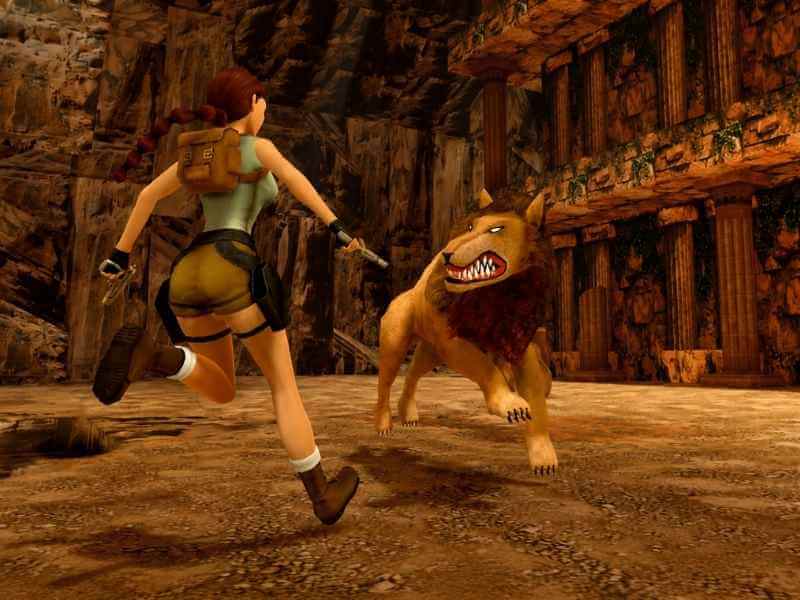
Lara Croft didn't just debut on the PlayStation; she dominated it. When I first played Tomb Raider, the combination of puzzle-solving, platforming, and tense combat in fully 3D environments felt like a genuine leap forward. Core Design built something that felt cinematic before "cinematic games" was even a phrase people used.
The tank controls feel clunky by today's standards—I'll be the first to admit that—but once you get used to them, navigating those ancient ruins becomes second nature. Each level felt handcrafted and deliberate, as if every trap and chamber were placed with purpose. True 3D exploration opened up vertical and horizontal movement in ways that felt revolutionary. Levels told stories without cutscenes. Lara Croft became a genuine cultural icon almost overnight, appearing on magazine covers and in conversations that went way beyond gaming. This game represents a pivotal moment in what games could aspire to be.
10. Crash Bandicoot

If you grew up with a PlayStation in the late 90s, Crash Bandicoot was the PS1. Sony used him as an unofficial mascot, and that made total sense. Naughty Dog created something that looked incredible for its time and played with the kind of tight, punishing precision that kept you glued to the screen for hours. I spent whole weekends trying to get 100% completion, hunting every box in every level, cursing at that bouncing chicken drum roll death animation.
Rock-solid controls mean every jump, spin, and stomp feels precise and fair. Creative level design—from boulder chases to motorbike rides—ensures no two levels feel the same. The gorgeous visuals pushed PS1 hardware harder than almost anything else at launch. The difficulty curve respected the player. The N. Sane Trilogy remaster is excellent, but playing the original PS1 version gives you that raw experience that I personally find more charming. Crash didn't just define a console; he defined a whole generation's idea of what a video game hero could be.
9. Silent Hill
I won't pretend Silent Hill didn't genuinely scare me in a way very few games ever have. While Resident Evil was already doing great things with survival horror, Silent Hill came in and flipped the entire formula on its head. Konami's Team Silent created something psychological and suffocating, using the PS1's hardware limitations as a feature rather than a flaw. The famous fog that blankets Silent Hill? That was a draw distance workaround. The almost unbearable darkness in the Otherworld? A memory constraint solution. Instead of hurting the experience, they made it more terrifying.
Silent Hill delivered psychological horror over jump scares—the dread was slow-building and deeply unsettling. Akira Yamaoka's soundtrack of industrial noise, haunting melodies, and absolute silence is used as a weapon. Monster design is rooted in symbolism; every creature meant something, which made them all the more terrible. Harry Mason searching for his daughter through a town designed specifically to break his mind still hits differently than most modern horror games. If you love the genre and haven't played the original, you owe it to yourself to experience where so much of modern psychological horror was born.
8. Final Fantasy IX

Final Fantasy IX has a reputation that only improved with time. When it launched in 2000, many people dismissed it as a step back from the futuristic settings of VII and VIII. What they missed was that Square was doing something deliberate: returning to the series' fantasy roots and creating the most emotionally rich, thematically complete Final Fantasy ever made.
Zidane Tribal is a genuinely likeable protagonist—optimistic, loyal, occasionally foolish—with a character arc in the final act that hit me harder on my fifth playthrough than on my first. Vivi Ornitier might be the most moving character in the entire franchise. The thematic depth about the meaning of existence, identity, and accepting mortality gives the story weight that most RPGs don't attempt. The Active Time Event system rewards exploring and watching story vignettes between main quests. Nobuo Uematsu's soundtrack is his PS1 masterpiece. Final Fantasy IX is the game I recommend most often to people new to JRPGs.
7. Gran Turismo 2

Gran Turismo 2 shipped with over 600 cars. Six hundred. On a PS1 disc. It took everything the original established and expanded it in ways that felt almost irresponsible in the best sense. The Rally Mode was a surprise addition that gave the game a whole second personality—sliding a Subaru Impreza through a dirt course felt completely different from clinical circuit racing.
| Feature | Gran Turismo 1 | Gran Turismo 2 |
|---|---|---|
| Cars Available | ~170 | 650+ |
| Tracks | ~11 locations | ~27 locations |
| Game Modes | Arcade + Simulation | Added Rally Mode |
| Licenses | Standard set | Expanded with more tests |
Some people point out occasional disc-read issues, and the handling model could feel stiff to newcomers. But when I sat down with this game—learning the tracks, tuning cars, chasing license tests—few racing experiences on PS1 came close.
6. Tekken 3

Tekken 3 is the reason I started taking fighting games seriously. Before it, fighting games were just something I button-mashed through with friends. After Tekken 3, I was learning move lists, studying matchups, and thinking about footwork and spacing. The jump from Tekken 2 to Tekken 3 was massive—characters moved faster, the juggle system was deeper, and new fighters like Hwoarang, Jin Kazama, and Eddy Gordo each brought something completely fresh. Eddy Gordo alone broke up more friendships at my school than I can count, because capoeira button-mashing was devastatingly effective against anyone who hadn't faced it before.
A roster of 23 characters, each with hundreds of unique moves. Tekken Ball and Tekken Force modes added serious replay value. The most polished gameplay of any fighter on the console, arcade-perfect presentation, and a soundtrack that genuinely slaps from start to finish. For me personally, Tekken 3 sits at the top of any list of the greatest PS1 games ever made in the fighting genre. It's not even close.
5. Tony Hawk's Pro Skater 2

Calling Tony Hawk's Pro Skater 2 a "sports game" feels like calling a painting a wall decoration. I picked it up with zero interest in skateboarding as a real-world activity, and two hours later I was learning the difference between a nollie and a heelflip because the game made me care. The control scheme was simple enough to pick up in minutes but had enough depth to keep me practising for months. Stringing together a manual into a grind into a lip trick into a revert was like solving a puzzle in real time.
The soundtrack—Rage Against the Machine, Dead Kennedys, Naughty by Nature—introduced me to bands I still listen to. Create-a-Park let me build my own skate park and find lines through it. Level design across School II, Skate Street, and the Hangar was dense with secrets, gaps, and hidden areas. Score chasing and completing every goal for every skater turned into a serious time sink. THPS2 sits in a rare category of games where I can go back today and instantly feel what made it great.
4. Resident Evil 2
Resident Evil 2 is, without question, one of the greatest games ever made—not just on the PS1, but in gaming history. I remember the moment the Licker dropped from the ceiling in the police station hallway, and my stomach dropped with it. Capcom took everything that worked about the original and made it bigger, scarier, more cinematic, and far more emotionally engaging.
Playing as Leon S. Kennedy and Claire Redfield across two separate campaigns with different stories and encounters gave you double the content and double the tension. The Raccoon City Police Department felt like a real place that had been turned into a nightmare. Mr X's relentless pursuit changed how horror games handled tension. Inventory management made every decision about what to carry genuinely stressful. The 2019 remake is stunning, but the original PS1 version has a raw, grainy intensity that I find impossible to replicate. Among all the top PlayStation 1 games of all time, Resident Evil 2 earns its place near the very pinnacle.
3. Castlevania: Symphony of the Night

The moment the castle flipped upside down and revealed a second, mirrored version of everything you'd already explored was genuinely jaw-dropping. I remember sitting back from my television and just laughing in disbelief at how clever it was. Castlevania: Symphony of the Night essentially defined the Metroidvania blueprint that's still thriving today.
Playing as Alucard through Dracula's sprawling castle is one of the most purely enjoyable experiences the PS1 ever produced. RPG depth disguised as action: levelling up, managing equipment slots, and discovering relics feed into a deeply satisfying progression loop. Alucard's ability to transform into a bat, mist, or wolf never got old. Richard Epcar's legendary voice acting—"What is a man? A miserable little pile of secrets!"—is legitimately iconic. Finding all the rooms, unlocking Maria as a character, and chasing a perfect completion percentage kept me coming back for a month. The castle itself functions like a character, every corridor and boss encounter meticulously designed. Symphony of the Night requires zero nostalgia to enjoy; it's just brilliant game design.
2. Final Fantasy VII

I was ten years old when I first played Final Fantasy VII, and I genuinely did not understand that a video game could make me feel the things that game made me feel. By the end of disc one, I was sitting on my bedroom floor, completely stunned. FFVII didn't just change what I thought RPGs could be; it changed what I thought games could be.
The story went places no mainstream game had gone before. Cloud Strife's fractured identity, Sephiroth as a villain with actual motivation and presence, environmental themes about corporate greed destroying the planet—it was layered storytelling that respected the player's intelligence. The Materia system gave complete freedom to build your party however you wanted, making every playthrough feel different. The world itself was enormous and rewarding to explore: Midgar's slums told a story through environmental design alone, the Gold Saucer felt like stepping into an entirely separate game, and optional characters Yuffie and Vincent rewarded thorough exploration.
Nobuo Uematsu's soundtrack at the absolute height of his powers, three discs that felt genuinely epic in 1997, Limit Breaks that unleashed pure chaos—talking about the best PS1 games without putting Final Fantasy VII near the very top simply doesn't make sense. It brought an entirely new audience to JRPGs, proved PlayStation could be a platform for mature storytelling, and showed what a team at the peak of their craft could achieve. Decades later, it still holds up as one of the greatest games ever made.
1. Metal Gear Solid

When I talk about the greatest PS1 games ever made, Metal Gear Solid is always the first name out of my mouth. Hideo Kojima created something in 1998 that gaming is still catching up to. The story, the characters, the fourth-wall-breaking moments, the stealth mechanics, the boss fights—everything came together in a way that felt genuinely unprecedented.
I still remember Psycho Mantis telling me what games I'd been playing by reading my memory card. I remember the codec call telling me to switch the controller to port 2 to beat him. I remember the Sniper Wolf encounter and how it made me feel genuinely sad in a way I wasn't prepared for in a video game. Metal Gear Solid didn't just entertain me—it made me think differently about what games could do.
The Psycho Mantis boss fight broke the fourth wall in a way that still feels wild decades later. The Sniper Wolf sequences are emotionally devastating. Codec conversations deliver pages of lore, character depth, and surprisingly warm humour. Multiple endings felt meaningful before that was a standard game feature. Revolver Ocelot is one of the greatest villains in game history. The narrative tackled nuclear deterrence, genetics, and identity in a mainstream action game. David Hayter's Snake became one of gaming's defining performances. Every boss required a different approach and told a story. New details emerge with every playthrough.
Playing Metal Gear Solid today—on original hardware, through emulation, or via a PlayStation store release—still feels like an experience that demands your full attention and rewards it completely. It's the game I point to when someone asks me why retro PlayStation games deserve to be revisited. No list of the best PS1 games means anything without it sitting right at the top.
How to Play These PS1 Classics Today
Best Ways to Legally Access PS1 Games in 2026
You have more legitimate options than you might think for playing the best PS1 games without diving into questionable corners of the internet.
PlayStation Plus Premium (~$17.99/month) is my first recommendation for most players. The top-tier subscription includes a rotating catalogue of classic PlayStation 1 games that you can stream or download directly to your PS4 or PS5. The library isn't exhaustive, but it covers a solid chunk of the greatest PS1 games ever made, and the convenience factor is hard to beat.
Original hardware plus discs gives you the full library, but prices on the used market have climbed significantly. Patient shoppers can still find deals at thrift stores and flea markets, especially on less-hyped titles. If you own a PS3, you're sitting on a goldmine: it can play physical PS1 discs natively, and the older PS Store on that system had an enormous digital library.
PSP and PS Vita offer another avenue if you already own them and have previously purchased digital PS1 titles. The store is archived, but transfers still work.
My personal favourite approach is hunting physical discs at retro game shops. There's something deeply satisfying about holding an original copy of Final Fantasy VII or Crash Bandicoot in your hands.
Top Accessories for Better Retro Gaming
Playing retro PlayStation games doesn't have to feel like a downgrade. With the right gear, you can make the experience polished and comfortable.
The original DualShock controller is still my gold standard for PS1 gaming. If you can find one in good condition, nothing beats that analogue stick layout for games like Ape Escape or Tekken 3. The 8BitDo SN30 Pro offers a great wireless option compatible with PC emulation and some modern consoles.
For displays, an HDMI adapter like the Pound HD Link Cable connects your original PS1 to a modern TV with a cleaner signal than composite. If you really want to go deep, an upscaler like the RetroTINK-5X Pro takes that old composite or S-Video signal and outputs clean 1080p that looks surprisingly good on a modern flat screen. I've run classic PS1 RPGs through one, and the difference over a basic RCA connection is night and day.
For serious enthusiasts, an Optical Drive Emulator (ODE) like PSIO lets you load PS1 games from an SD card directly on original hardware, eliminating disc read errors entirely.
Emulation: Keeping These Classics Alive
Emulation is honestly one of the most important reasons why the best PS1 games haven't faded into complete obscurity. For players born after the PS1's prime years, emulation offers a window into gaming history that physical access alone can't provide at scale.
The go-to PS1 emulator I keep coming back to is DuckStation. It's open-source, actively maintained, and does an incredible job of accurately reproducing how PS1 games actually ran—including those intentional quirks like wobbling textures that were just part of the PS1's charm. It supports widescreen hacks, higher internal resolutions, and texture smoothing, but you can also dial everything back for a pixel-perfect, authentic experience.
The current emulation landscape offers accuracy that older emulators like ePSXe couldn't match. DuckStation pushes cycle-accurate emulation, meaning edge cases and obscure games run far better. Setting it up takes maybe 20 minutes, and once you're running, controller mapping is straightforward. You can upscale internal resolution to 4K, apply PGXP (perspective-correct geometry) to reduce the infamous PS1 polygon warping, and use post-processing shaders to simulate a CRT look on a modern screen.
A quick legal note: Emulating a game you don't own sits in a legally grey area in most regions. Downloading ROMs for games you haven't purchased is technically copyright infringement. However, dumping your own legally purchased PS1 discs and playing them through an emulator is generally considered permissible for personal use. Start with what you legally own, explore PlayStation Plus Premium's official catalogue, and treat emulation as a preservation tool rather than a shortcut.
Physical PS1 discs are degrading. Disc rot is real—I've personally lost a copy of The Legend of Dragoon to it. As original hardware becomes harder to maintain, emulation becomes the primary way future generations will experience these games. That access matters because these games deserve to be played, discussed, and passed on.
You might also enjoy exploring the best SNES games of all time or the best NES games of all time for more classic gaming recommendations. And if you're looking to upgrade your modern setup, we have guides on how to choose a monitor for gaming and choosing between 24 inch vs 27 inch monitor for gaming.
Conclusion
The PS1 was something genuinely special. Going back through these 25 games reminds me just how much that little grey console shaped gaming as we know it today. From the epic classical PS1 RPGs that had me glued to my TV for entire weekends, to the fighting games my friends and I fought over on the couch, every single title on this list brought something memorable to the table. The racing games, the hidden gems, the action adventures—they all hold up in ways I genuinely didn't expect.
If you haven't already, I'd seriously encourage you to dig into these classics. Whether you track down original discs, fire them up through PlayStation Plus Premium, or use an emulator for titles that are otherwise impossible to find, the PS1 library is a goldmine that deserves way more time than most people give it today. Pick one game from this list that you've never played, find a way to load it up this weekend, and experience what made an entire generation fall in love with gaming.
Frequently Asked Questions
What is the best PS1 game of all time?
There's no single answer everyone agrees on, but Final Fantasy VII and Metal Gear Solid are the two titles that top nearly every serious ranking. Gran Turismo deserves a mention too, as the console's biggest seller. Pick based on whether you want story depth or pure gameplay polish.
What is the best-selling PS1 game ever?
Gran Turismo holds that title with around 10.85 million units sold worldwide, narrowly beating Final Fantasy VII, which sold just under 10 million copies.
How many games were released for the PS1?
More than 4,000 games were released over the console's lifespan, spanning every genre imaginable. That's exactly why narrowing this list down to 25 felt nearly impossible.
Can you play PS1 games on a PS5?
Not natively. You cannot play PS1 discs directly on a PS5. You can still access a growing library through PlayStation Plus Premium's emulation service or buy select titles directly from the PlayStation Store.
Can you play PS1 games on a PC?
Yes, through emulators like DuckStation or ePSXe. Load up a BIN or ISO file, plug in a controller, and most PS1 titles run smoothly on modern hardware, often sharper than the original CRT experience ever looked.
When did the PS1 originally release?
The original PlayStation released in Japan on December 3, 1994, then arrived in North America and Europe the following year.
How many PS1 units were sold worldwide?
Sony's PlayStation reached a combined total of 102.49 million units shipped, making it the first console in history to break the 100 million mark.


Leave a Reply